
.jpg?1756755522370)
Off. Covered by a veil of dust that grows thicker day after day. It isn’t abandonment—just a pause, one that can last weeks or even months.
And yet, while we’re away or simply busy elsewhere, time never stops working… on the paint, on the seals, on the cabin, on the battery. A long stop may seem harmless, but it can turn into a string of very real problems the moment you decide to get back on the road with your travel companion.
A dead battery, wipers stuck to the windshield, dulled paint, or a film of dust that doesn’t lift easily. It’s classic—and it doesn’t happen by chance.
The truth is: a car needs care even when you’re not using it. Maybe especially then. Because inactivity is when materials stiffen, humidity begins to act, and dust creeps where it shouldn’t.
In this article we’ll see how to prepare your car for a rest period and keep it in perfect condition. In the next paragraphs we’ll explore:
- What to do before the stop to avoid future regrets
- During inactivity: small gestures, big impact
- Where habit ends, care begins
What to do before the stop to avoid future regrets
A car isn’t made to sit still. Every part—battery and engine, interior materials and door seals—is designed to work regularly: to carry current, to be lubricated, warmed up, kept active.
That’s why, if you know your vehicle will be unused for a long period, the first rule is not to underestimate preparation. It’s like leaving for a long holiday: the house gets closed, protected, cleared of the unnecessary. And the car, in its own way, is a small universe that deserves the same attention.
Let’s start with the car’s heart: the battery. It’s one of the first victims of inactivity.
If it stays connected, it tends to discharge gradually—especially in modern cars packed with control units that draw power even with the engine off. The simplest advice is: disconnect it.
You only need to remove the negative terminal cable. Alternatively, if you’re not comfortable doing that—or you fear losing electronic settings—you can use a battery maintainer: a small device that keeps the battery alive without overcharging it, useful and unobtrusive.
Next: tires. Even if they don’t move, they bear the car’s weight and can develop flat spots over time, losing elasticity. The result? When you drive again you may feel vibrations—or worse, permanent deformation.
To prevent this, inflate them slightly above normal pressure before the stop, or better—if possible—raise the car on jack stands to remove the load entirely. It requires care, but it can save you from ruining a set of tires.
Then there’s the bodywork—the part that suffers most from time passing. Dust, humidity, temperature swings: all of it can dull the finish and make the car look older than it is.
If the car will rest in a closed, dry garage, the situation is mostly under control. Even then, a breathable protective cover helps prevent direct dust build-up and reduces that “dull film” that forms with time.
But before covering it, the paint should be clean and protected.
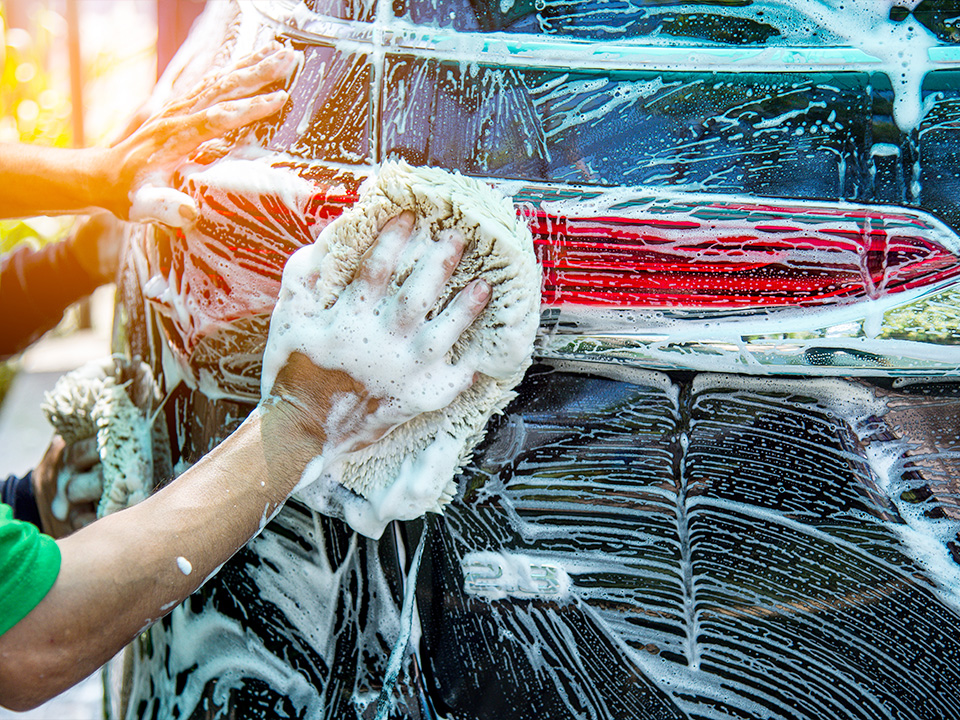
After a careful wash—ideally with Shampoo Wax for glossy paint or Matt Paint Cleaner for matte finishes—and once fully dried, the best move is to apply protection.
For glossy paint, use a protective wax such as Polishing Protective Wax; for matte paint, choose a quick detailer like Renewing Protective Detailer.
This leaves a thin but durable film that enhances the surface and protects paint from external agents and atmospheric contaminants. It’s easy to apply, non-abrasive, and can also be used on seals and trims.
Use Hand Pad Polishing to spread it and Microfibre Cloth gold to finish.
But don’t stop at the outside. The interior is a delicate ecosystem—especially if the car is stored somewhere that isn’t perfectly sealed.
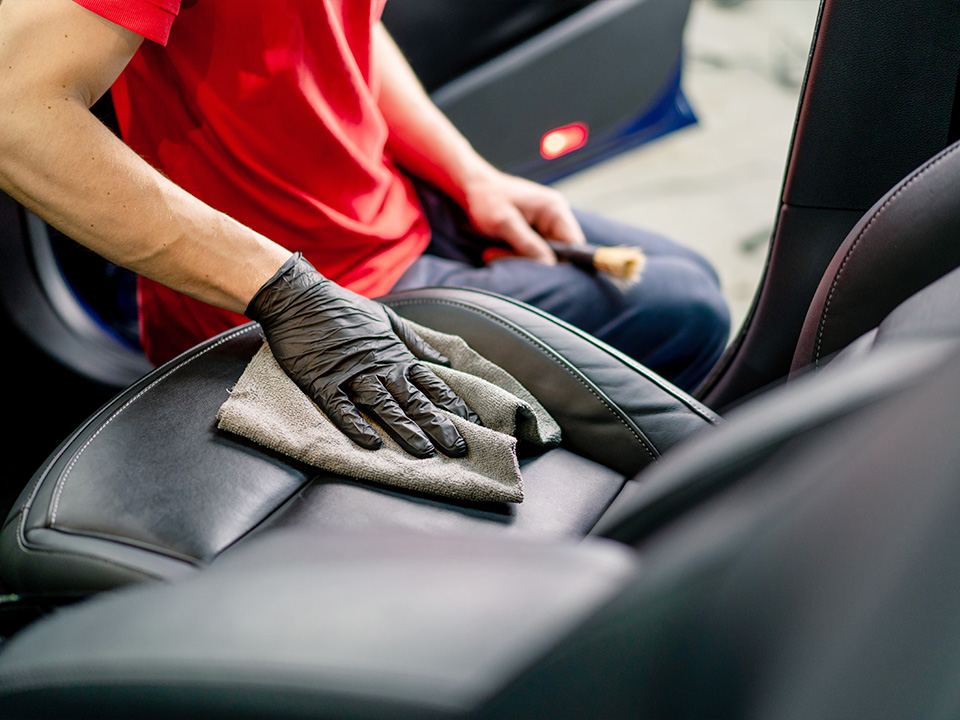
Dust slips everywhere, organic residues can create unpleasant smells, plastics risk drying out. Start with a vacuum and carefully clean seats, mats, and crevices. Remove any forgotten objects or food—yes, even a single candy can attract insects or create mold.
Use a dedicated product for dashboards and plastic surfaces such as Dashboard Polish: it’s perfect here, protects against UV (yes—even in a garage there is light exposure), and leaves a mild anti-static effect that slows dust build-up.
For fabric or leather seats, you can use Interior Cleaner Kit to remove residues and keep the cabin fresh and ready.
You should also check fluids: antifreeze/coolant, oil, brake fluid. Even if the car sits still, levels should be correct and fluids in good condition.
Old oil may contain acidic residues that, remaining in contact with an engine at rest, can cause micro-damage over time.
During inactivity: small gestures, big impact
Do you know how much the environment where your car rests matters?
Humidity and condensation can cause interior mold, oxidation on metal parts, and haze on the windshield. And dust? Dust is everywhere—settling into every crack—and over time it can act like sandpaper, especially when combined with moisture.
A well-ventilated, dry garage with minimal temperature swings is ideal. But the best solution remains a breathable, fitted cover that protects without trapping humidity.
Avoid improvised covers—plastic, heavy, or non-breathable sheets that don’t let paint breathe, and can even cause scratches if they shift or move during storage.
In the meantime, even if the car doesn’t move, it’s good practice to open the doors periodically to refresh the air and prevent stale odors.
If the storage area is dusty or has strong odors, you can reapply Dashboard Polish periodically to keep surfaces protected and pleasantly scented, while Interior Cleaner Kit can help with small localized interventions, without heavy cleaning.
Another sensitive area is the windows. If they stay closed in a humid place too long, they can become hazy—especially on the inside.
A simple solution? Wipe them with a dry microfiber cloth every two weeks—possibly adding a light application of Antifog Kit, which not only prevents fogging but leaves an invisible protective film that’s helpful when you start driving again.
Don’t forget to move the car a few centimeters every 15–20 days. You don’t need to start the engine—just release the parking brake and roll it forward or backward a little, enough to avoid the tires resting in the exact same spot.
This helps prevent deformation and preserves their round shape. For the same reason, leave the parking brake disengaged; if it’s pulled for too long, it can stick or cause issues when you return. Use wheel chocks instead to prevent accidental movement.
If the car is stored outdoors, everything becomes more challenging—but it’s not impossible to keep it in good shape. Protection and checks become the keywords.
You can reapply Polishing Protective Wax monthly on exposed surfaces. You don’t need to wash the entire car each time—just do a localized clean with a microfiber cloth, then apply wax again on the most exposed areas. This maintains a constant barrier against water, dust, and UV.
Meanwhile, remember to check for any signs of leaks under the car. Even if everything was fine when you parked it, time can reveal small leaks from dried seals or contracted hoses.
Keep a piece of cardboard or an absorbent mat under the engine area: you’ll spot abnormalities immediately. And if you find them, don’t postpone—this is likely the right time for a check-up.
During storage, even exterior accessories like wiper blades deserve attention. They can deform if left pressed against the windshield for too long.
Lifting them slightly or placing a small rubber support beneath is a helpful trick to preserve their shape. Hardened blades can leave annoying streaks—or even scratch glass—when you use them again.
One simple but effective piece of advice? Don’t forget the car. Ten minutes every two weeks is enough: air it out, check tire pressure, inspect the area around it, remove spider webs or leaves. Inactivity doesn’t have to be a sentence. It can become a restorative pause for the car—like good sleep for the body.
Where habit ends, care begins
Preparing a car for a “long sleep,” and caring for it until it wakes again, is certainly about good maintenance practices—but it’s also a form of respect for what accompanies us every day, even when it doesn’t.
The Care is born from this same philosophy: offering products that are essential for cleaning and polishing, but also represent a lifestyle made of attention, precision, and beauty.
Visit the website to discover the full range of solutions dedicated to both cars at rest and cars on the move.
You’ll find the quality you were looking for, the effectiveness you need—and a new idea of care that starts long before you turn the key. And never truly ends.