
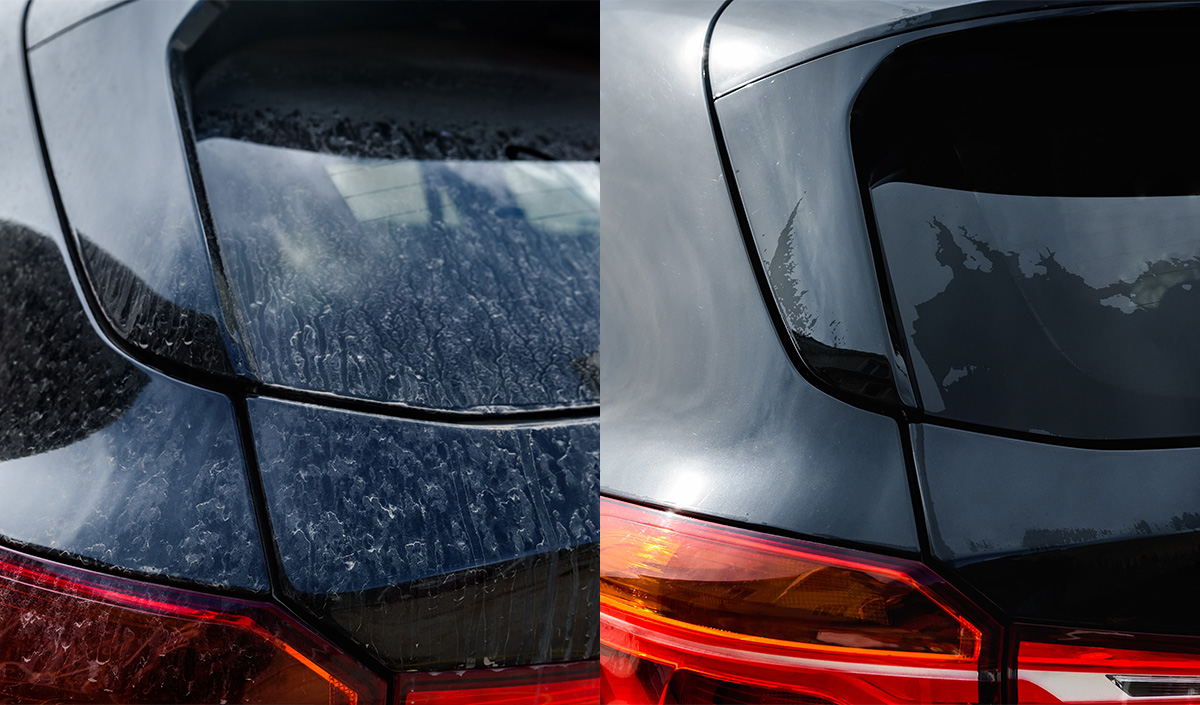
We’re not only talking about sunsets stolen from the beach, the photos you wanted to take but didn’t, or those days you meant to wash the car and then thought, “I’ll do it tomorrow.” We’re talking about the marks. The tiny, distracted ones that settle day after day. Pollen trapped in the trim, sand that found shelter in the cracks of the seals, resin that fell during that picnic under pine trees. Vacations end, but they stay.
Maybe today everything still feels normal. The car is there, doing its job, taking you where you need to go, holding up through the first September storm. But if you really look—if you take the time you didn’t have in summer—you’ll notice something different.
The paint no longer reflects like it used to, the windows look dull, the cabin holds onto a faint trace of heat and closed air. That’s when you understand your car needs to breathe again.
So here’s our new guide. Inside you’ll find:
- Invisible dirt and visible marks: where summer residue hides
- Inside the cabin: removing what summer left behind
- When protecting is more than polishing
- Beauty is care that continues over time
So—let’s get comfortable. We’re starting.
Invisible dirt and visible marks: where summer residue hides
At first glance, your car may still look in good shape. Maybe it’s still glossy, with reflections playing across the panels, and the interior seems tidy—at least to the naked eye. But a closer look, the kind that goes beyond the surface, reveals that summer leaves more than you expect.
We’re not only talking about sand stuck between floor mats or salt spray on the windshield. There are residues that settle into the most unexpected folds—tiny particles the heat has fused, the wind has pushed, and humidity has fixed in place: pollen, resins, acid rain, squashed insects, sea air, tar, and traces of sunscreen.
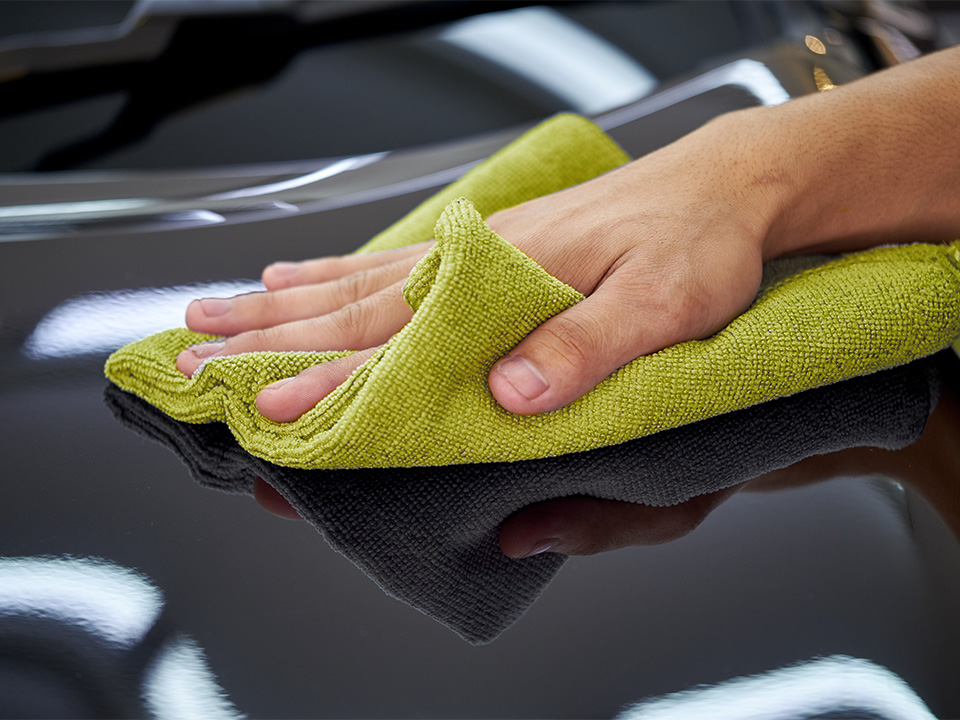
That’s why post-summer cleaning is a restoration. An act of attention that goes deep, rebalances what the season has stressed, and goes far beyond a “simple wash.” Dirt accumulated in hot months can attack materials, affect paint, and damage plastics and seals.
If left too long, it can bond chemically to surfaces—making removal harder and increasing the risk of micro-scratches and permanent haze.
This is why the process needs method—and it starts with what’s most exposed and most fragile: the bodywork.
Step one is effective but gentle cleansing, capable of removing not just visible dirt, but the fine residue too—like pollen and urban dust that summer deposits day after day.
For glossy finishes, Shampoo Wax is ideal; for matte finishes, Matt Paint Cleaner works with the right delicacy.
Both include protective agents, and Shampoo Wax contains a small amount of wax—perfect for cleaning deeply while leaving a first light protective film as you continue the detailing.
To prevent solid particles from scratching the surface during washing, it’s essential to use a dedicated glove like Shampoo Glove—soft, absorbent, able to trap residue instead of dragging it.
After a thorough rinse, one of the most underestimated but decisive steps begins: drying.
If water evaporates on its own, it can leave limescale spots and contaminants behind. Better to use a dedicated microfiber cloth such as Microfibre Cloth, which absorbs without lint and prepares the surface for what comes next.
After shampooing, you may need a targeted decontamination step—especially if you’re dealing with tar, resin, or insect residue.
The key is to act precisely, without attacking the whole car unnecessarily.
Tar / Resin Remover can be applied locally with a clean cloth and left to work, gently dissolving stubborn residue so you can remove it without effort. No need to rub or press.
And when it comes to organic contamination—mosquito marks, insects, and splatter— Bug Remover is extremely useful for bodywork, glass, headlights, mirrors, and plastics.
Use it after washing: spray on the areas to decontaminate, wait a few minutes, wipe with a microfiber cloth like Microfibre Cloth green, then rinse with plenty of water.
Then there’s glass.
A window exposed for weeks to sun, salt, dust, and organic residue can’t truly be considered transparent. Visibility is safety, not just aesthetics.
Using Glass Cleaner with Microfibre Cloth orange removes even the invisible films left by A/C airflow, humidity, and interior vapors—restoring sharpness and brightness.
Clean glass also helps prevent autumn fogging and improves wiper performance—often forgotten in summer, but ready to become essential again soon.
Don’t overlook exterior seals and plastics, either. Summer heat dries them out, dulls them, and can even lead to cracking if they weren’t protected properly.
That’s why, after cleaning, it’s useful to apply Plastic Refresher.
It doesn’t just “clean”—it revives, protects, and nourishes. Surfaces regain uniformity, texture becomes fuller, and the eye perceives a continuity that would otherwise break between one part of the vehicle and another.
And the feeling—both to the touch and to the eye—is that of a car truly cared for, one that has resisted the most demanding season.
Why all these steps? Because post-summer detailing is an opportunity: a moment to look at your car not as an object that merely took you around, but as a travel companion worth thanking.
And if there’s one thing sun, sea, and road teach every summer, it’s that beauty needs protection—even when you’ve just come home.
Inside the cabin: removing what summer left behind
When we think about cleaning the car after summer, we usually picture the exterior first: spots on the paint, a dusty windshield. But open the door, sit in the driver’s seat, and you’ll realize the truest “signs” of the season often live inside.
Ultra-fine sand trapped in floor mats, fingerprints on seats, condensation turned into stagnant moisture in air ducts, snack residue from road trips, and odors that tell the story of summer better than any photo.
The cabin—during hot months—becomes a small greenhouse, accumulating more than it seems.
The first step is simple: remove the excess.
Empty door pockets, storage compartments, trunk, and rear seats. Every forgotten bottle, crumpled bag, or “I’ll deal with it later” item can turn into a source of stale smells or even mold.
Then comes vacuuming—properly.
Not two quick passes on the driver’s mat. Work in sections. Remove the mats and shake them out. Focus on the gaps between seats, stitching, pedals, under-seat areas, even around headrests. Use a narrow nozzle for tight spots, and a soft brush to lift dust embedded in fabrics.
Once everything is vacuumed, you move to true cleaning.
Interior Cleaner Kit becomes an essential ally: a kit designed to tackle stubborn summer grime without harming fabric, plastics, or leather.
Its dedicated cleaner penetrates into the weave and helps remove common stains (sweat, food residue, prints) as well as the subtler ones—like sunscreen or protective oils transferred from clothes to seats without you noticing.
Use is straightforward: spray, let it sit briefly, then wipe with a clean microfiber cloth. Seats regain cleanliness, lose that dull film, and recover visual uniformity and a softer feel.
Then there’s the dashboard—often overheated by the sun and made opaque by long exposure. If neglected, it can crack or fade.
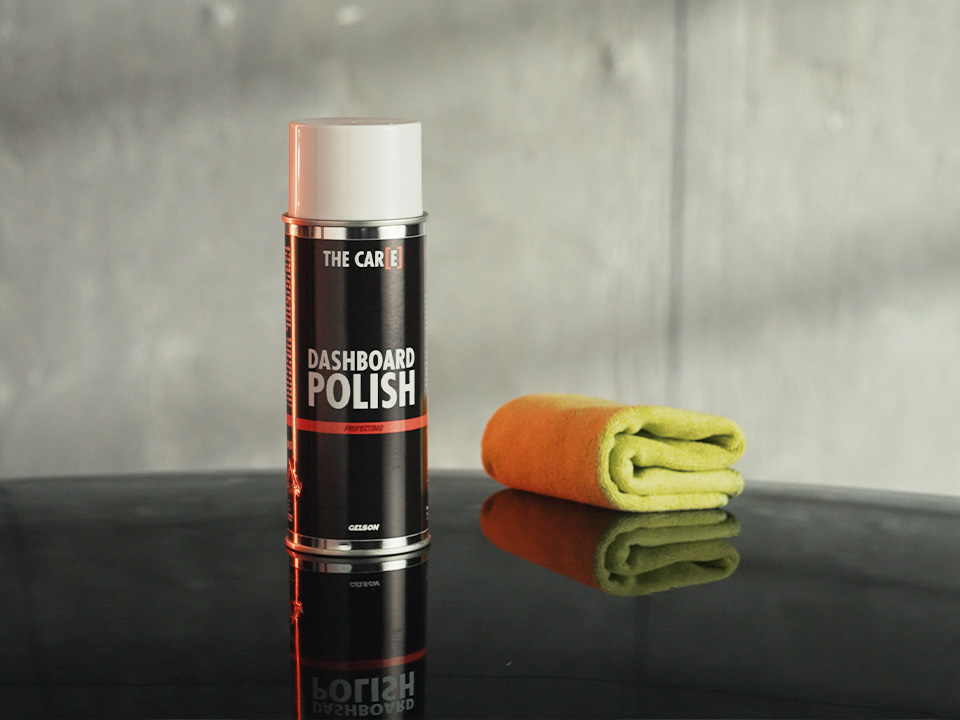
To revive and protect it, Dashboard Polish is ideal: easy to apply with a soft cloth, instantly giving the dash a deeper, cleaner, more professional look.
Its formula doesn’t just “shine”—it protects against UV and creates an anti-static effect that repels dust, helping interiors stay cleaner for longer.
Another key step is caring for interior plastics and rubber: inner handles, door sills, air vents—areas that collect grime, oils, and fingerprints.
Here, Plastic/Metal Refresher Kit is effective: it cleans without harshness, leaves a natural satin finish (never greasy), and revives tired or faded plastics.
And don’t forget the scent of the cabin. After a deep clean, it can help to add a discreet, effective air freshener—ideally neutral or fresh. Because the car is also a personal space, and the experience includes what you breathe.
When protecting is more than polishing
Your car’s paint is like skin after a vacation: tanned, yes—but also stressed by weather, constant UV exposure, and environmental aggression. You wouldn’t skip a protective moisturizer. So why skip it for the car?
Some products go beyond appearance and work by creating an invisible shield. One of them is Polishing Protective Wax: a high-performance wax that combines ease of use with professional results.
After washing, drying carefully, and restoring cleanliness to the exterior, applying this wax completes the detailing process.
Pour a small amount onto Hand Pad Polishing and spread it using slow, even circular motions.
Wait a moment—just long enough for the product to haze naturally—then remove it with a Microfibre Cloth gold, soft microfiber with high finishing performance.
The result? A silky surface that reflects light with elegance—and, above all, long-lasting protection against dust, rain, resin, urban pollution, and UV rays.
This wax can also be used on exterior plastics and trims, making it a complete ally for every glossy surface.
In the end, care becomes savings: protecting means preventing, slowing surface aging, reducing the need for heavy “emergency” clean-ups, and preserving the car’s value over time.
Beauty is care that continues over time
For anyone who believes car maintenance is more than “washing it once in a while,” The Care is a reference point for treating every surface—inside or out—with the same attention we give to what we truly love.
Our products—carefully selected and tested—are designed for those who want real, professional, long-lasting results, without the pressure of “professional detailing.”
From removing the most stubborn dirt to protecting the most delicate surfaces, each formula is built to answer the real needs of drivers who, season after season, want their car to keep telling a story of shine, order, and respect.
Because the real difference—like in any relationship—lives in daily gestures.