
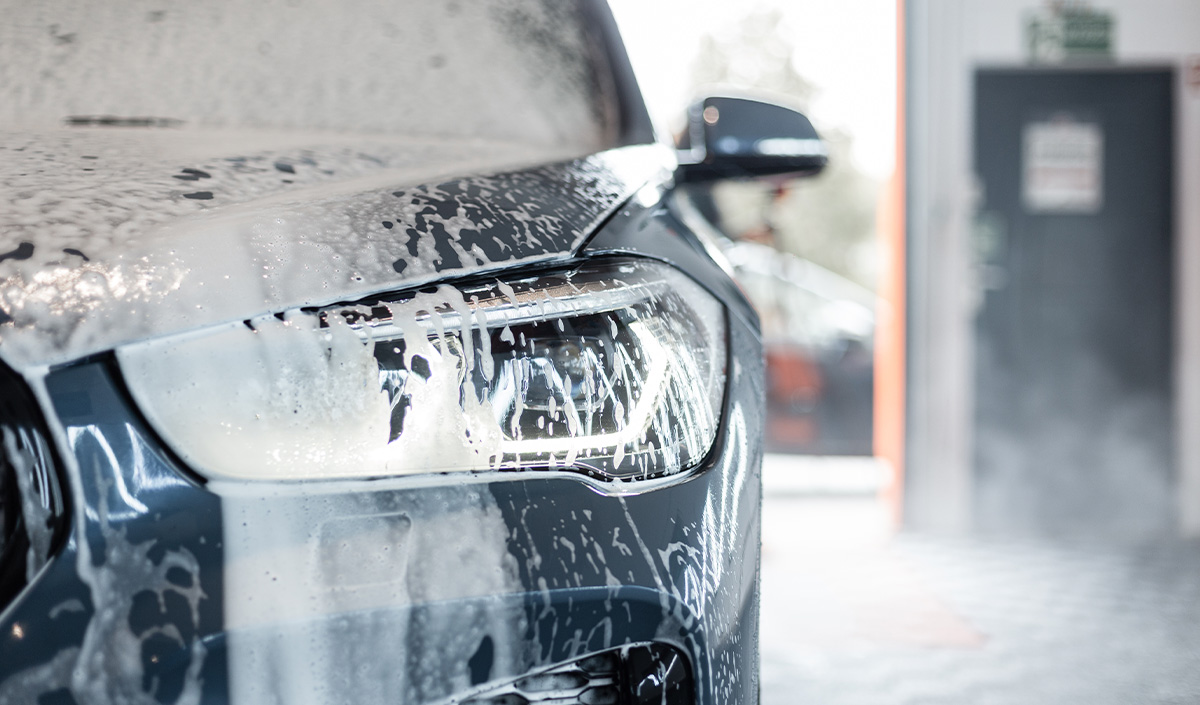
This article is intended as a definitive guide—clear and easy to save—for anyone who wants to avoid the most common mistakes during DIY washing, explaining their consequences and offering practical solutions to achieve a expert detailer-level result even at home, provided that a few bad habits are corrected.
In this guide you will find:
- Why wash your car
- Before you start: the mistakes you make even before getting your car wet
- When washing: wrong gestures that leave a mark
- After washing: invisible errors that compromise the result
Why wash your car?
Anyone who cares about the appearance and health of their vehicle has, at least once, tried DIY car washing, convinced that a bit of water, a sponge, and some detergent would be enough to bring the bodywork back to its former glory. Nothing could be further from the truth.
Washing your car is not simply a cleaning task. Rather, it means carrying out a meticulous, structured process made up of a sequence of actions, precautions, and choices designed to preserve the beauty and integrity of the surface.
If, on the other hand, even small mistakes that seem insignificant are made, the risk of irreversibly compromising the paint’s gloss is practically certain.
The fundamental issue—often overlooked by those approaching home car detailing—is that the damage caused by incorrect washing is not always immediately visible. Unlike, for example, a parking dent or a cracked windshield, swirl marks, dullness, and micro-abrasions on the paint build up over time, becoming evident only when it is too late to fix them without professional intervention. From this perspective, avoiding mistakes is an investment in the aesthetic and functional longevity of your vehicle—far more effective than any miracle product or last-minute polishing.
So it is not enough to simply clean: you need to know how to do it—with which tools, which products, in what order, and—above all—with which precautions, avoiding those mistakes that degrade the car’s paint, even under the most caring hands.
Before you start: mistakes made even before wetting the car
Let’s start here: washing the car begins long before turning on the tap. We have to begin with a “mistake as trivial as it is common”: many drivers underestimate the importance of a pre-wash, even considering it an optional luxury.
In fact, the first mistake to avoid is precisely not performing a degreasing pre-wash.
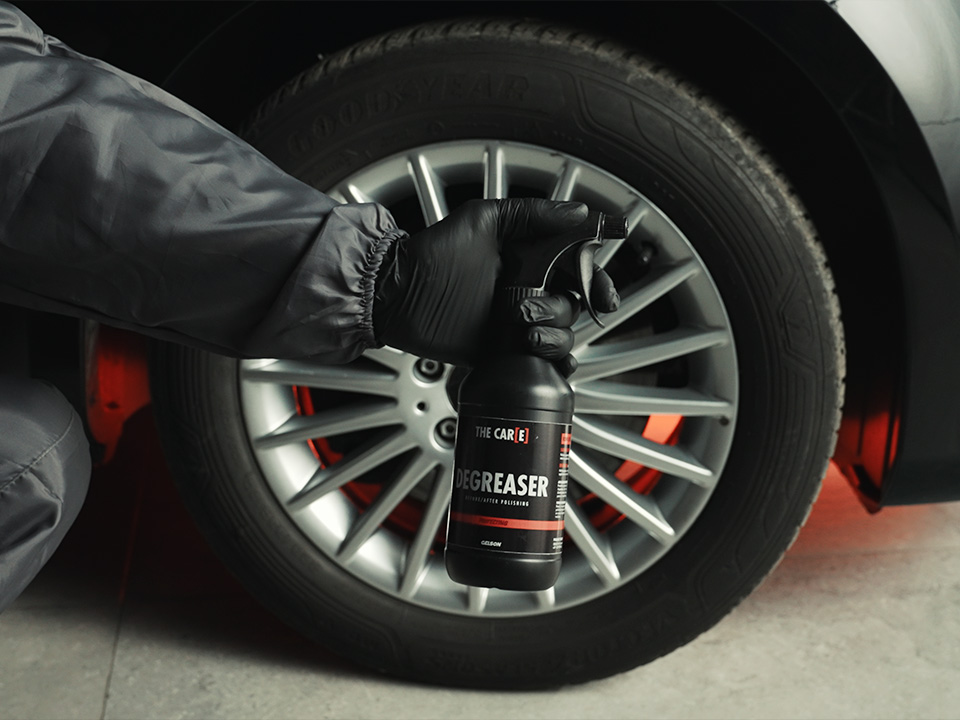
Skipping this step means leaving heavy dirt residues on the surface—such as fine dust, smog, insects, dried mud, and road film—which, during the actual mechanical wash (with a glove or sponge), get dragged across the paint, causing microscopic scratches known as swirls. The solution is simple but technical: you should use a specific product such as Degreaser, to be sprayed on the lower and dirtier parts of the vehicle (bumpers, wheel arches, front hood) and left to work for a few minutes. This helps dissolve heavy grime and remove it with an initial water rinse before direct contact, thereby reducing the risk of scratches.
Another preliminary mistake is washing the car under the sun or on hot bodywork. This bad habit is among the main causes of streaks, because the accelerated evaporation of detergents leads to residue forming on still-wet surfaces. The golden rule is to work in the shade and on cool bodywork, avoiding the middle hours of the day, especially in summer. A seemingly trivial detail that makes a real difference is the choice of where the wash takes place: you need a flat surface, away from trees (to avoid sap or falling leaves), and with good drainage for runoff liquids.
Another often overlooked mistake is not having the right equipment ready before you begin. Many drivers start washing only to realize halfway through that they are missing a dry cloth or other specific products or accessories, and are then forced to improvise.
This breaks the correct sequence of steps and can undoubtedly compromise the results.
It’s better to prepare a kit in advance with everything you need—specific products and dedicated accessories for complete cleaning, both inside and out—and tackle each washing phase without unnecessary stress, like a true professional!
A very widespread mistake is using generic products, often household ones, that are not suitable for a car’s delicate bodywork. Dish soap, for example, may seem effective because it degreases well, but in reality it contains aggressive surfactants that remove the paint’s natural protection, damaging the wax layer and altering the shine.
Even the water used can be an underestimated problem. Using very hard water without rinsing properly can leave limescale spots that are clearly visible after drying. In the absence of a reverse-osmosis system or demineralized water, the recommendation is to do the final rinse with plenty of running water and dry immediately with a microfiber cloth, to prevent limescale from settling and forming an unattractive—and harmful—hard film.
These are mistakes rooted in a lack of awareness which, although seemingly unknown, can practically compromise the final result even before you truly begin washing.
During washing: those wrong gestures that leave a mark
Many drivers, even well-intentioned ones, make a series of mistakes at the heart of the washing operation, when direct contact between tools, hands, and bodywork becomes decisive.
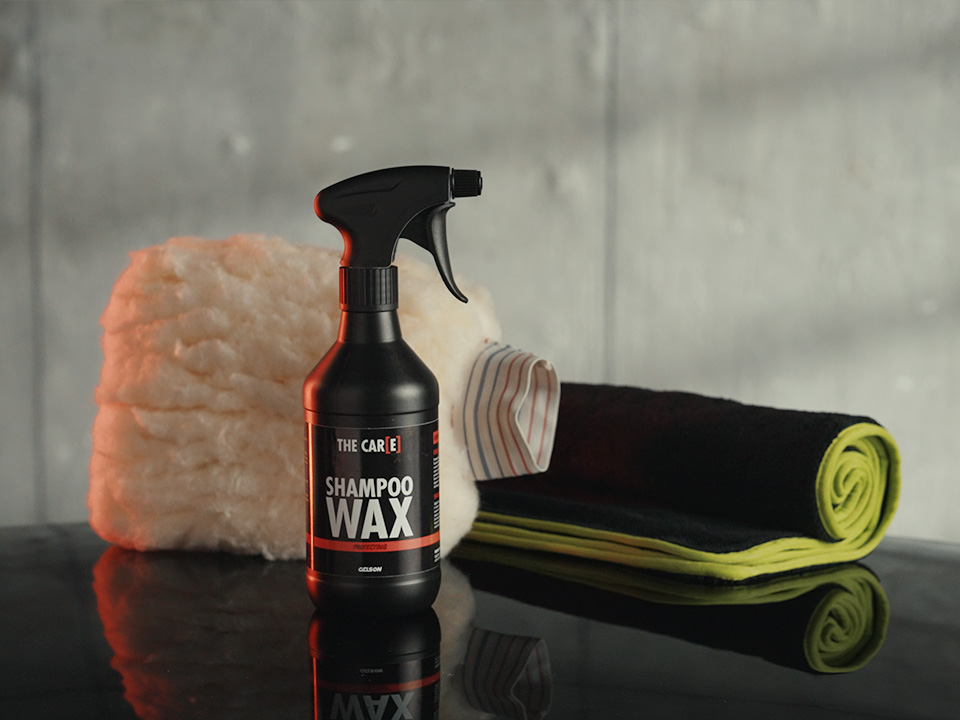
The first often overlooked mistake is, as we anticipated, not using a specific product. Shampoo Wax is ideal. Slightly foaming with protective wax, you can use it on virtually all external bodywork surfaces. It provides protection and a glossy finish for shiny paints. Another mistake made during the washing phase is using too much shampoo or not diluting it correctly. A product like Shampoo Wax, being concentrated, requires balanced dosing to perform at its best. Using more does not mean cleaning better: on the contrary, it can leave residues on the surface and make rinsing more difficult, increasing the risk of streaks. Another mistake—perhaps the most underestimated of all—is using a single sponge for the entire car, without differentiating between dirtier areas and more delicate ones.
Lower areas (wheel arches, bumpers, side skirts) accumulate road debris, brake dust, and metallic particles: if you then use the same sponge on the hood or roof, you drag these abrasive impurities over the most visible surfaces, damaging and dulling the paint. The recommendation is to use high-quality microfiber cloths or a dedicated car-wash glove, such as Shampoo Glove, ideal for applying shampoo and removing dirt without risking scratches on the bodywork.
It is also important to wash the car from top to bottom, following the logic of gravity: start from the roof and move down progressively, rinsing the glove and bodywork often to avoid buildup of foam and residues.
Another serious mistake is rinsing the bodywork poorly after washing. Water is needed to completely remove shampoo and residual particles: leaving even a small amount behind means compromising clarity and shine, and creating micro-encrustations that over time damage the protective layer. The professional advice is to use an abundant stream of water, at moderate pressure (even a simple garden hose can be enough if used properly), focusing on gaps, under mirrors, and critical areas such as the front grille, window edges, and emblems. The water must not merely “wet” the surface, but carry away every residue.
Another incorrect behavior concerns the excessive frequency of aggressive washing: many people, to achieve constant shine, wash the car too often and too vigorously, often with unsuitable tools. But excessive washing, if done poorly, is worse than occasional washing. Balance is needed. You can also use Brightening Protective Detailer between one full wash and the next. This product can be applied quickly on dry bodywork or slightly dampened with a microfiber cloth to remove light dust, fingerprints, or streaks and leave a protective glossy film. It is a valuable ally to avoid a full wash every week while still keeping the car looking well cared for.
During washing, it is also important not to neglect exterior accessories: wheels, tires, trims, moldings. They are often washed quickly or too late in the process. In reality, elements like alloy wheels collect a lot of stubborn dirt (brake dust, tar, oil) and should be treated with a dedicated product such as Degreaser or, in the case of more resistant contaminants, Tar / Resin Remover. Tires should be cleaned and then treated with Tyre Restorer to achieve a professional, protective “wet black” effect.
Avoiding mistakes at this stage truly means achieving “showroom” results even in your own garage.
After washing: invisible mistakes that compromise the result
Once washing is finished, many think the job is done. In reality, it is precisely after rinsing that the fate of the bodywork is decided: drying, protection, attention to detail, and proper storage are the phases that enable a professional result.
A mistake at this stage? Not drying the bodywork properly, letting the water evaporate on its own. This inevitably causes the formation of streaks, limescale spots, and mineral residues on paint and glass, especially if the water is hard (rich in minerals). The risk is twofold: on the one hand a neglected aesthetic effect, on the other—over time—microscopic encrustations that compromise shine and can make subsequent polishing or waxing more difficult.
The solution is as simple as it is underestimated: use high-GSM microfiber cloths, such as Microfibre Cloth orange, a double-face microfiber cloth, ideal for drying the bodywork without leaving streaks thanks to its high absorbency and specifically designed to dry large surfaces without creating friction. The cloth should be used by blotting, not rubbing, proceeding methodically from one area to another and replacing the cloth or flipping it when it becomes too wet.
Another professional trick is to dry the car in the shade, preventing rapid evaporation—accelerated by the sun—from leaving residue marks. Another common mistake is not applying any kind of protection after washing. Cleaning the car without protecting the paint is like washing your face without moisturizing it: you miss a crucial opportunity to preserve the surface’s health. After a careful wash, the paint is “naked”—without protective barriers against dust, rain, bird droppings, UV rays, insects, and pollutants.
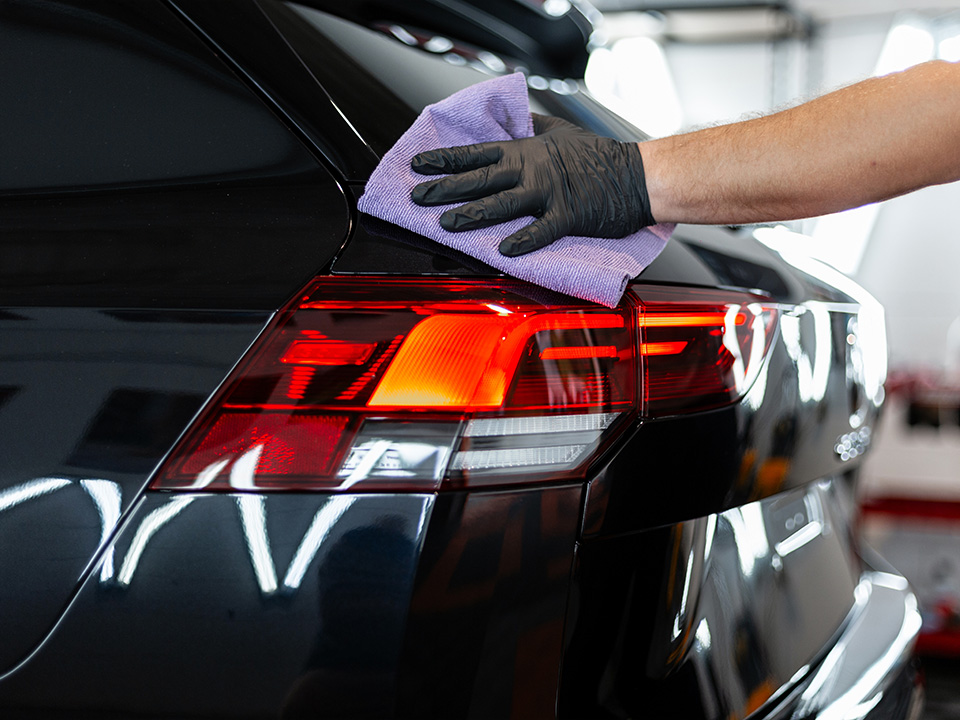
This is where Polishing Protective Wax comes in—a protective wax designed to create a water-repellent shield on the bodywork, helping water slide off, reducing dirt adhesion, and prolonging the “just washed” effect. Application is easy even for non-experts: spread it with a cloth or pad, let it dry for a few minutes, then remove it with a dry cloth, leaving a deep, glossy finish. You can use Microfibre Cloth orange both to apply the wax and for final removal, and Microfibre Cloth red, a microfiber polishing cloth ideal for the final step, easily removing wax residues and giving the bodywork a glossy, even finish.
Here too, however, the mistake is around the corner: using too much product, or worse, spraying it on hot bodywork, can create streaks and sticky residues that are difficult to remove. The advice is to always work at low temperatures and with a small amount of product, spreading it immediately with clean, dry microfiber.
A very common mistake at this point is neglecting exterior details such as plastics, moldings, chrome trims, emblems, or grilles. Over time, these elements tend to become dull, fade, or turn gray, ruining the overall look of the car even if the bodywork is glossy. Yet with a targeted intervention they can be revived in just a few minutes. Plastic / Metal Refresher Kit was created precisely for these cases: a regenerating product that restores tone, color, and shine to often-forgotten materials, without greasing or creating an artificial glossy effect. Even here, however, incorrect application (for example, using too much product or dirty cloths) can undermine the result.
Finally, perhaps the most trivial but frequent mistake: not storing products and tools properly after use. Leaving bottles open, exposing cloths to dust, or putting them away dirty means finding them unusable—or harmful—the next time.
The good habit is to clean everything, let it dry, and store each item in a closed box or bag, away from heat and humidity. Having a small, tidy kit ready to use makes ongoing maintenance easier and encourages consistency in caring for your vehicle.
We at The Care don’t want to be just a brand, but advisors who can support you through every phase of your detailing, helping you achieve professional results even at home.
Explore the intera gamma and start taking care of your car today, like a true professional.