
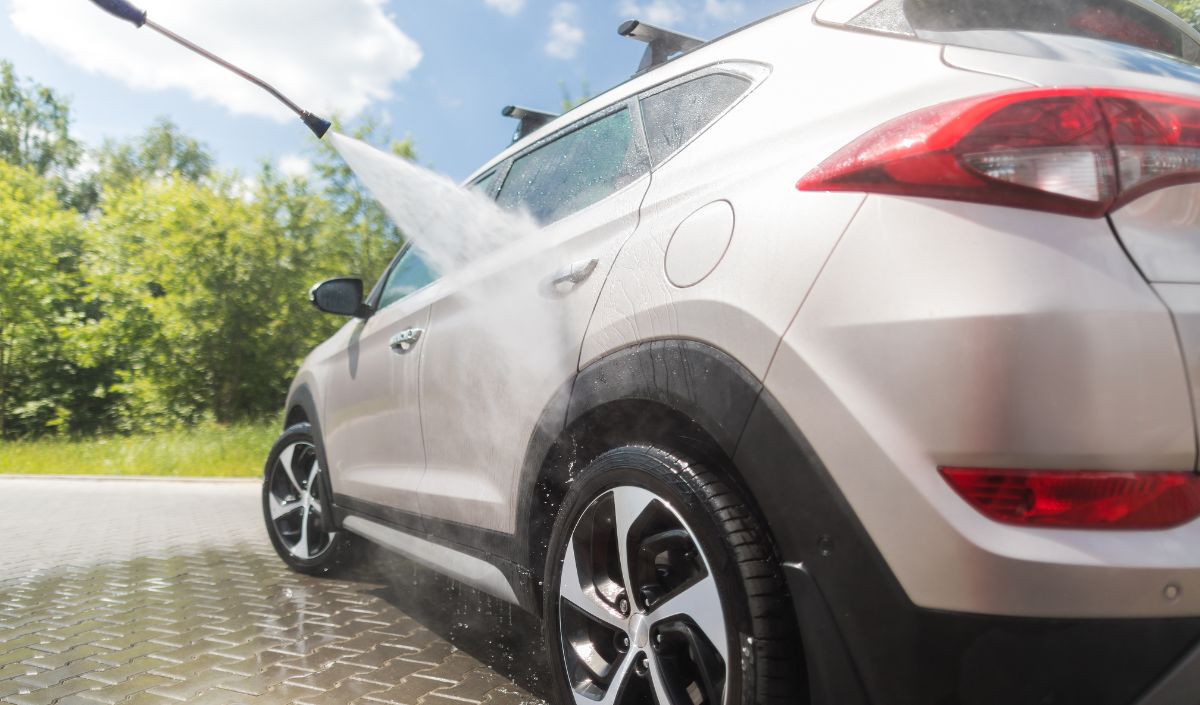
How many times, after putting time and effort into a careful wash, have you found yourself staring at the hood and noticing that dull film—those halos that appear as soon as the water evaporates?
Do you know why it happens? Because a freshly washed car isn’t necessarily a truly clean car. The culprit is limescale. It’s present in tap water—especially in areas where water hardness is high—and it settles on the freshly washed surface. Once the water evaporates, dissolved minerals (mainly calcium and magnesium) leave behind whitish stains that are undeniably unattractive and, over time, damaging to the paint’s shine.
So how can you protect yourself from this and keep your car’s bodywork glossy, smooth, and genuinely clean? Read our guide below. You’ll find:
- How limescale damages the paintwork (and what to do to prevent it)
- Drying is the crucial moment to avoid stains and water spots
- What if limescale is already there?
- Long-lasting shine starts with smart, small habits
How limescale damages the paintwork (and what to do to prevent it)
Sometimes it’s the water itself—tap water that looks perfectly clear—that becomes our worst enemy. So how can we prevent it from damaging the car’s paint?
After an outdoor wash, all it takes is one sunbeam and a few minutes of distraction to see those unattractive white halos appear on the surface. They’re far more visible on dark cars, but on light paint the damage is still real. The result is dull spots, loss of gloss, reduced performance of any protective polish, and—if neglected—these residues can build up in layers and become increasingly harder to remove.
Here are the first two rules: avoid washing the car in direct sun (especially on hot days) and never let the water dry on its own outdoors.
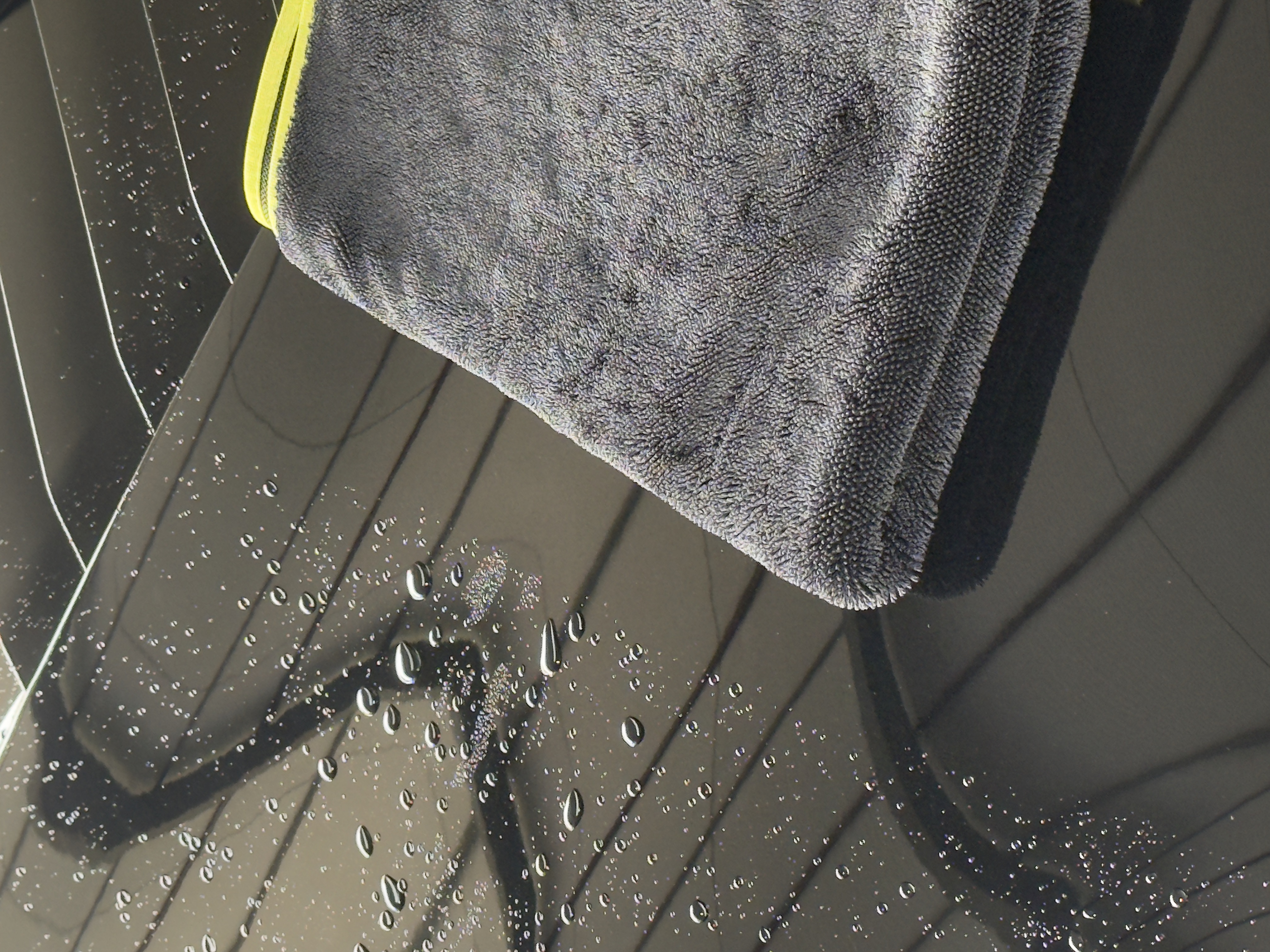
As soon as you finish rinsing, it’s a good habit to use a high-quality microfiber cloth—like Microfibre Cloth—to dry the bodywork with smooth, orderly movements, from top to bottom. This type of cloth—soft, absorbent, and safe even on delicate surfaces—soaks up water quickly without leaving streaks or scratches, helping prevent limescale from bonding to the surface.
Of course, water quality also plays a role. That’s why, whenever possible, it’s best to use demineralized or osmotic water for the final rinse. It’s one of the most effective strategies, because it eliminates the minerals that cause deposits—ideal for anyone who wants an immaculate finish.
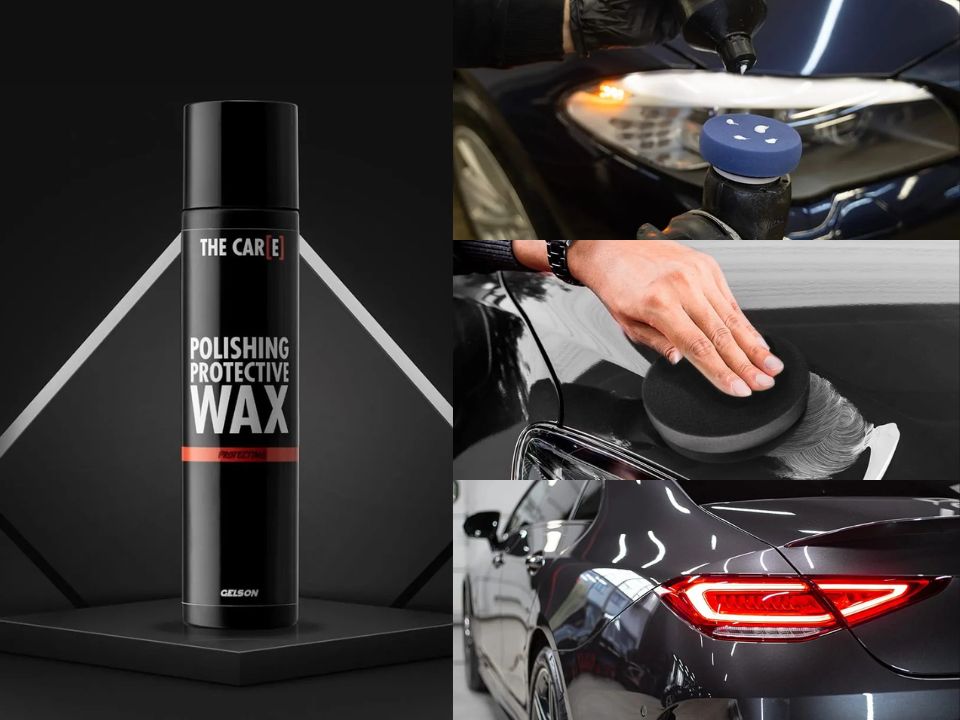
But not everyone can do that, so the next step is to boost protection with a hydrophobic barrier. The recommended product here is Polishing Protective Wax, a liquid wax that not only enhances gloss but creates a resistant, invisible layer that helps water slide off before it has time to dry.
This way, even if a few droplets remain here and there, they won’t have enough time to leave marks. Apply a small amount on a clean cloth or soft applicator pad and spread it in circular motions, one area at a time. After a few minutes, remove the excess with the same microfiber cloth, leaving the surface smooth and glossy.
Finally, for maintenance between washes, we recommend Brightening Protective Detailer—a protective spray that refreshes the surface, restores the hydrophobic effect, and extends protection. Use it after every wash or before a rainy day so that water won’t sit on the surface but will slide away, carrying light dirt with it.
One extra tip: don’t apply the product in direct sun or on a hot body panel. Heat speeds up water evaporation and can affect product distribution, increasing the risk of streaking and reducing hydrophobic performance. Work in the shade, at mild temperatures, and take your time.
Drying is the crucial moment to avoid stains and water spots
Let’s go back to drying for a moment—because it’s one of the most underestimated yet decisive phases when it comes to protecting paintwork from limescale. Drying must be immediate right after rinsing, especially in DIY washes.
As mentioned, a microfiber cloth is ideal—especially a long-pile one—because it allows you to blot the bodywork effectively without rubbing. Follow the right order: roof downwards, section by section, switching to a dry side as the cloth becomes damp.
A common mistake is drying with too much pressure or using just any cloth. Better to avoid it. Only fabrics designed for car care can offer the right balance of absorbency, softness, and precision. The result? A perfectly clean, dry surface ready to be sealed.
To keep microfiber performing well, treat cloths with care and wash them regularly to prevent residue buildup that could scratch paint or compromise later steps. Wash microfiber separately, use a neutral detergent, and never use fabric softener, so the fibers stay absorbent and gentle.
What if limescale is already there?
Sometimes, even with the perfect routine and the right products, limescale still appears—because it’s sneaky, stubborn, and often invisible until it’s too late. Mineral residues settle into the micro-pores of the paint, change how light reflects, and make the surface feel rough and dull to the touch. When that happens, a quick wipe won’t be enough.
The first step is to avoid impulsive actions: no abrasive sponges, no dry rubbing, and no household cleaners.
If the spots are light, a microfiber cloth slightly dampened with demineralized water may be enough. If they’re more persistent, you’ll need a specific decontamination product that dissolves calcium and magnesium salts without damaging the paint or stripping protective layers. Apply it with gentle, circular movements, let it work for the required time, and then rinse.
It’s also important to take a broader approach and treat all surfaces—not just paintwork, but also glass, seals, plastic trims, and chrome details—because limescale attacks anywhere a droplet sits. That’s why using different, clean cloths for each area matters.
A step that’s often overlooked is checking the surface after decontamination. Lightly running your hand over the paint can reveal areas that still feel rough or dull, meaning you may need a second pass. Alternatively, a gentle clay bar can help remove stubborn residues mechanically—again with caution: never press too hard and never work on hot panels.
Finally, once the issue is removed, it’s essential to restore long-lasting protection. Wax, sealant, or detailer? It depends on your time and how you use the car. Whatever you choose, it’s worth building it into a monthly preventive routine made of small gestures that protect over time.
A great starting point is also a neutral shampoo such as Shampoo Wax, suitable for all paint colors and gentle surfaces. Its formula respects paintwork and any existing protective layers, without altering color or leaving streaks.
Long-lasting shine starts with smart, small habits
Taking care of your car isn’t just about aesthetics—it’s a habit where every step, from drying to protection, becomes part of a ritual refined over time. That’s how you prevent limescale, preserve gloss, and extend the life of your paintwork.
And in this journey, relying on people who truly know the craft makes all the difference. The Care, with its experience and attention to detail, guides every driver toward a more conscious maintenance approach—made of small daily gestures that turn into lasting results. Because true shine isn’t accidental: it comes from a philosophy of smart protection, starting right after the wash and carrying your car much further than you might imagine. Today and tomorrow.