
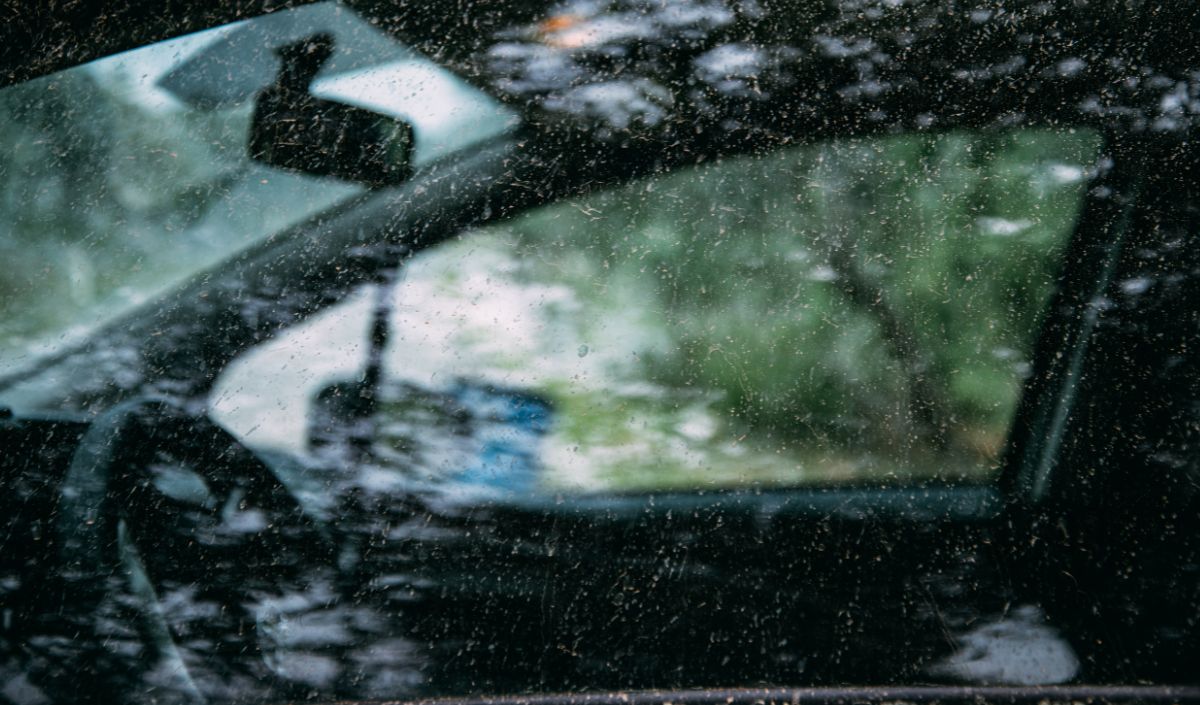
There’s no way around it… just a few kilometers in the rain, or a day spent on wet, dirty roads, are enough to leave a car covered in splashes, streaks, and compacted dust. Mud builds up along the sides, water droplets left to dry create dull circular marks on the bodywork, and over time the paint loses its shine. It’s a slow, relentless process—and not just an aesthetic one—because dirt, debris, and salty residues are among the main causes of surface deterioration. They attack protective layers, penetrate micro-scratches, and settle on the most vulnerable surfaces.
So how can this be avoided? Washing the car after heavy rain or after driving through muddy areas is certainly a good habit—but be careful, because a quick rinse alone is not enough to solve the problem. And above all, an incorrect wash can do more harm than good.
Let’s take a closer look at how to wash your car properly, removing dirt and mud residues without damaging the paint.
In this guide you’ll find:
- The first rule is to rinse before touching
- Drying is part of protection
- After the rain, the healing ritual
The first rule is to rinse before touching
Do you know the mistake many people make? Often, in a hurry and faced with visibly dirty bodywork, they grab a sponge, soap up the car, and start scrubbing. But if the surface is still covered with sand grains, soil, or dried mud, you’re not cleaning—you’re scratching. You’re creating countless micro-abrasions.
This happens even if you’re using a very soft cloth, because every tiny particle dragged under pressure can leave a mark and cut into the paint. That’s why the very first step must always be thorough rinsing, preferably with low-pressure water, starting from the top and working downward, letting the flow carry away the bulk of the dirt.
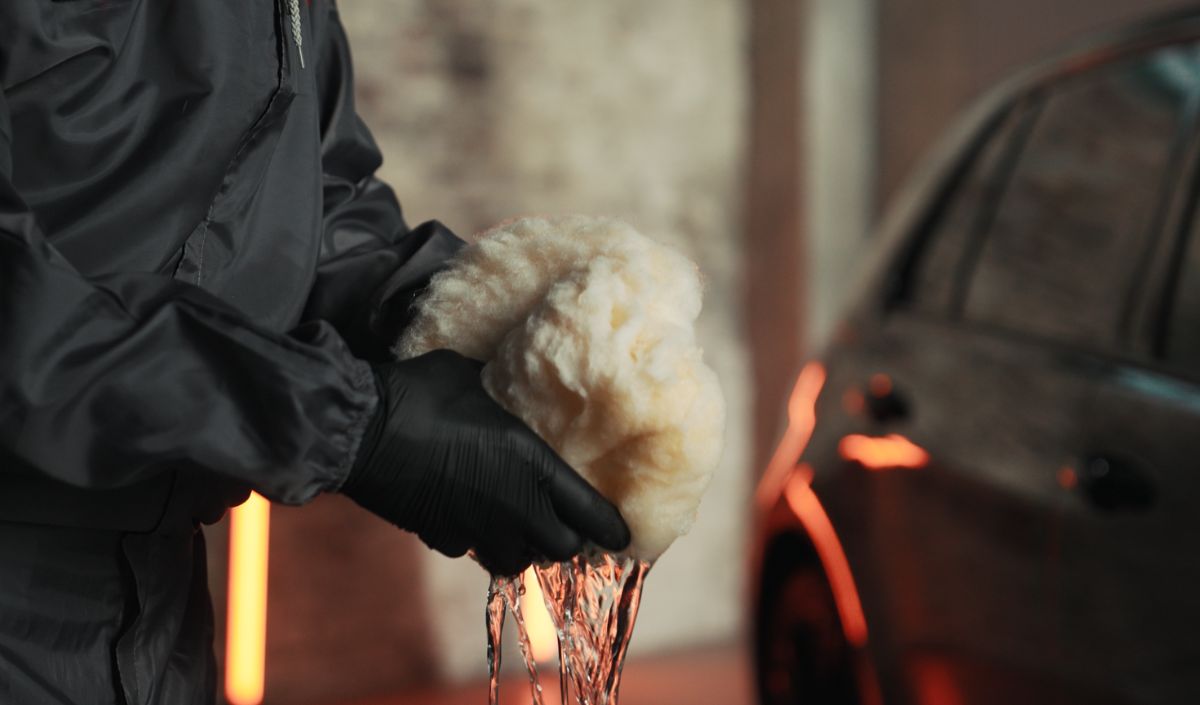
Only after the bodywork has been “freed” from surface residues can you move on to the actual wash—and only with the right products.
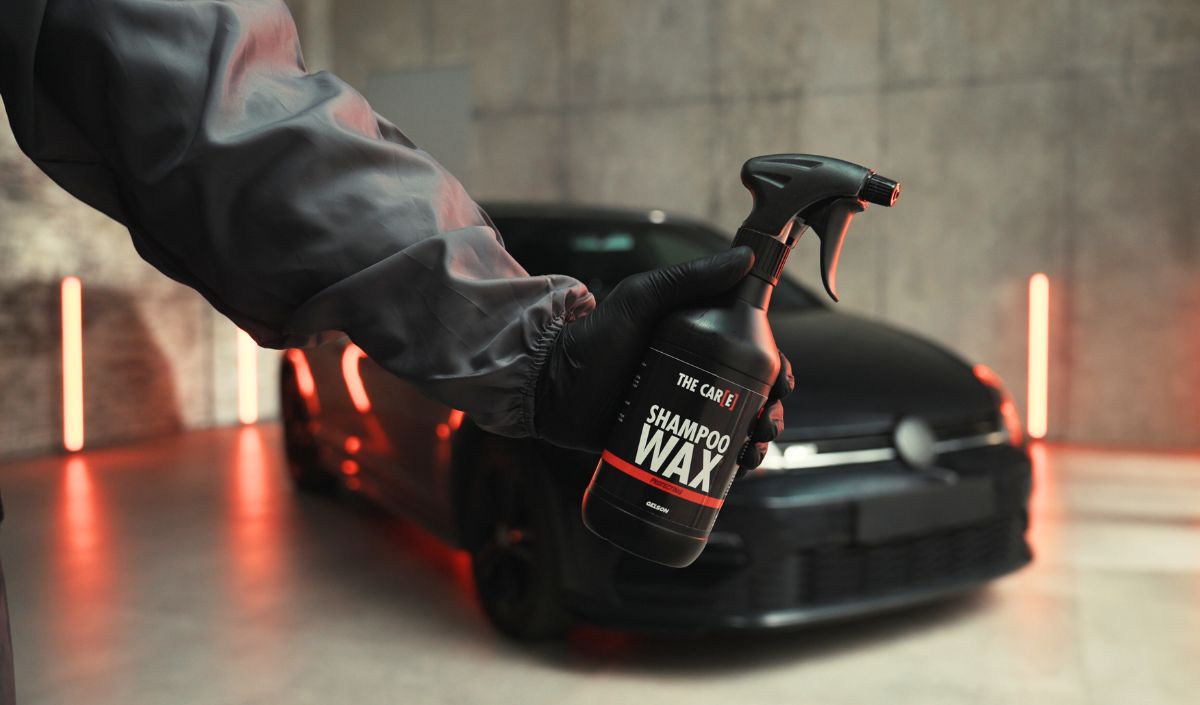
For cars with glossy or metallic paint, the ideal product is Shampoo Wax, a high-quality shampoo enriched with wax, designed to clean effectively without compromising shine. Its action is twofold: it removes mud efficiently while leaving a thin water-repellent film that makes future washes easier and helps protect against weather damage. It can be used diluted with water, together with Shampoo Glove, a microfiber glove designed to trap dirt and prevent it from being dragged back onto the surface. Thanks to its soft, highly absorbent structure, it allows you to work in sections, following the lines of the bodywork without ever forcing.
For those who own a car with matte paint, the risk is even greater, because incorrect treatments can irreversibly alter the finish, creating glossy streaks and uneven areas. In this case, the right solution is Matt Paint Cleaner, a dedicated cleaner that removes dirt while respecting the matte texture—cleaning thoroughly without altering the original appearance.
Drying is part of the protection
Many people think washing ends with the final rinse—but that’s not the case. Letting the car air-dry, especially after washing, exposes the surface to the formation of streaks and limescale marks, which imprint themselves on the paint and gradually damage it. These marks aren’t always visible right away, but under angled light or garage lighting they become obvious—and annoying.
After washing the car, the treatment must be completed with the drying phase, which should be done manually, ideally using a high-quality microfiber cloth such as Microfibre Cloth orange. Its high absorbency allows it to retain water without needing to pass repeatedly over the same area.
This cloth is ideal because it leaves no lint or streaks and, above all, it doesn’t scratch. Use it gently, without applying pressure, simply following the flow of the water.
A useful tip is to fold the cloth into four, giving you eight clean surfaces to rotate during the process, avoiding spreading already saturated water. As always, it’s best to work in the shade on a cool bodywork surface—if the sun is strong, water evaporates too quickly, leaving marks before you can dry them.
During the drying phase, you also get to “feel” the surface of the car, checking whether any impurities remain, whether the treatment has worked properly, or if some areas need a second pass.
After the rain, the ritual of care
When you think about it, washing your car after a storm or a muddy weekend isn’t just a functional gesture to restore aesthetic and mechanical balance. It also helps extend the life of the vehicle, because day after day residues quietly work away, corroding the surface without us really noticing—until wear becomes evident.
But there’s another, subtler aspect: washing your car, when done carefully and with the right products, is also a way to reconnect with your vehicle. A car is, after all, a personal space in motion—an extension of our daily lives. Taking time to care for it is, in essence, a way to slow down, observe, and respect ourselves through what accompanies us every day.
The Care offers a complete range of solutions for every type of paint, every seasonal need, and every level of dirt. So even after the rain—even when mud seems to have the upper hand—there’s no need to despair. You just need to know how to treat it. And do it properly. Scopri di più about all the products designed for those who love taking care of their car.