

Sand gets everywhere — and it really doesn’t want to come out. And what about those white salt stains that settle like a fine dust on plastics, door panels, even on the dashboard?
In October, when the days grow shorter and the air becomes more humid, that same sand and salty residue that seemed harmless turns into a persistent nuisance.
- Why are sand and salt the enemies of your car interior?
- The right tools and products to remove sand and salt residue
- Care that continues even after summer
So how can you truly deal with these traces of summer that keep traveling with us even when the sea is only a memory? Ignoring them means resigning yourself to a car that ages faster. Better to act instead — restoring freshness and protection, preserving comfort and aesthetics. Especially with the challenges of autumn ahead, bringing rain, humidity, and new issues to manage.
Why are sand and salt the enemies of your car interior?
At first glance, sand feels light, almost intangible — we might even call it harmless. But what happens when it gets into the cabin and settles onto fabric, leather, carpet, and plastic? The tiniest grains become abrasive particles, capable of marking delicate surfaces, scratching seat upholstery, and slowly wearing down floor mat fibers. Just think of how often you sit down after a day at the beach: every movement becomes friction, pressure that drags sand from one spot to another. The result is premature wear, stains that seem impossible to remove, and, in the long run, a tired, neglected look.
And what about salt? If sand is abrasive, salty residue is corrosive. Sea humidity carries microscopic salt particles that settle practically everywhere, and over time these hygroscopic particles — meaning they can hold water from the environment — create a damp micro-film that penetrates materials. On plastic surfaces it leaves a whitish haze; on leather inserts it can dry out and crack them; on fabrics it causes stains and that distinctive “old” smell. And the more time passes, the harder it becomes to remove.
The combination of heat, sand, and salt creates a brutal mix that affects both aesthetics and function: fabrics lose their tone, plastics turn dull, and even internal metal parts — like seat rails — can begin to show signs of corrosion if you don’t intervene in time. Many drivers also underestimate odors, like that of trapped sand holding onto humidity. Salt residue does the same. In cooler months, when the air is more humid and the windows stay closed, that hidden buildup can create a stale smell that’s hard to eliminate. It’s not just annoying — it’s a sign that bacteria and mold are proliferating in the gaps. Once the odor sets into the fabrics, even the strongest air fresheners can’t hide it.
A quick pass with a vacuum cleaner certainly isn’t enough, because it only removes the visible sand, while the finer particles remain trapped deep inside. The same applies to salt residue: a damp cloth alone won’t remove it.

That whitish film requires specific products capable of dissolving salts and removing them without damaging materials. The problem is that, if neglected, sand and salt build progressively. Every day it gets worse, every week it layers up, every month it increases the damage. And all of this affects the sensory experience inside the car — comfort, and even mood. Are you really sure you want your car to carry summer around like this?
The right tools and products to remove sand and salt residue
At this point the question comes naturally: how do you truly remove sand and salty residue from the interior? Above all, you need the right tools and products — designed to respect materials without damaging them — because a common mistake is using improvised solutions that, while trying to fix one issue, create others.
Let’s start with the most immediate phase: removing coarse sand. A good vacuum cleaner with a narrow nozzle is essential to reach the hidden areas — under the seats, along the rails, between seams. But for fabrics and multi-material interior surfaces, the ideal starting point is the Interior Cleaner Kit, a set specifically designed for complete cabin cleaning. It’s effective against residues such as salt, dust, and fine sand, yet gentle because it doesn’t attack fabrics, plastics, or synthetic leather.
Use it by spraying the product directly onto a microfiber cloth, then wiping with linear strokes. This avoids saturating materials, especially the most delicate ones. After application, simply follow with a second clean, dry cloth to remove any residue. Even after the first pass, the fabric feels fresher, the dashboard surface looks uniform again, and door panels lose that dull film that often reveals salt residue.
But what should you do when you’re dealing with leather surfaces, real or synthetic, that have retained salt? The answer is to work with a targeted approach. The Interior Cleaner Kit can be enough for routine cleaning, but for more stubborn cases it’s best paired with a high-density microfiber cloth such as Microfibre Cloth green, which captures residues without leaving lint. Here the gesture should be light, almost like “dabbing” rather than rubbing, allowing the product to work without stressing the surface.
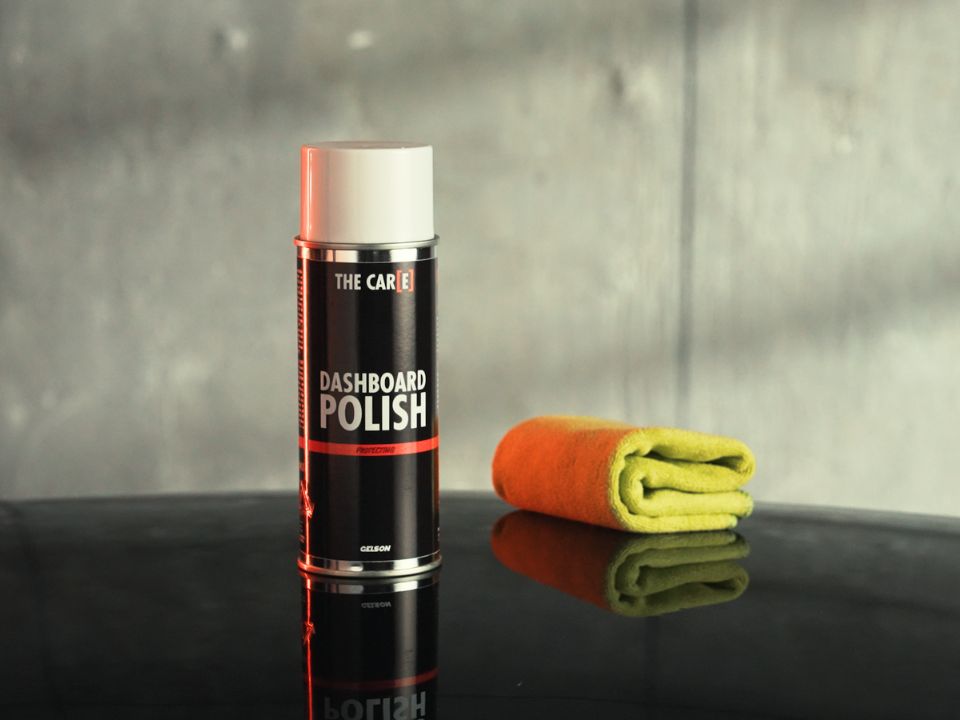
And for dashboard plastics or door panels, where salt residue tends to show up as a whitish haze that dulls the original color? To restore their appearance and protect them from UV rays — which still matter in autumn, filtering through the windows or on clear days — the right product is Dashboard Polish. In addition to nourishing the surfaces, it creates an anti-static effect that slows dust buildup and reduces the adhesion of salty particles suspended in the air.
And floor mats — the big stars of sand-related issues? Here the approach needs to be even more decisive. Fabric mats should be removed from the car, beaten out, and vacuumed deeply. Then, to remove invisible salt residues, it’s worth treating them with the cleaner from the Interior Cleaner Kit, working it in with a soft-bristle brush. This way, the fibers are cleaned thoroughly and the typical rough feel caused by salt disappears. For rubber mats, the solution is faster: a wash with water and a touch of gentle detergent is enough to bring them back to their original condition, followed by complete drying to prevent bad odors.
And let’s not forget the inside of the windows, often overlooked when talking about sand and salt residue — they can also collect deposits. A targeted treatment with the Glass Cleaner Kit removes marks, residues, and saline films in just a few steps, leaving the glass perfectly clear.
After cleaning and sanitizing every surface, there’s one final step: protection. Because removing sand and salt without protecting simply means postponing the problem by a few weeks. In this case, the recommended product is Polishing Protective Wax — a protective wax that, while designed primarily for exterior bodywork, can also be used on seals and interior trim pieces. Its natural-wax formula creates a barrier that repels dirt, dust, and salty microparticles, making future cleaning much easier.
So — would you rather live with an interior that feels marked and dull, with unpleasant odors that remind you of a summer that’s long gone? Or would you rather rediscover every day the freshness of a well-kept cabin that smells clean? The difference isn’t theoretical — it’s practical.
Care that continues even after summer
Taking care of the interior after months by the sea isn’t just an aesthetic gesture — it’s a way to respect the time you’ve lived, keep the memories without suffering the consequences, and restore to your car the dignity it deserves. With method, attention, and the right products, sand and salt residue become a closed chapter, making room for clean, fresh-smelling, protected surfaces.
So why postpone it? The best part is that none of these steps requires professional skills — only the willingness to dedicate a few minutes to caring for your vehicle. The rest is done by the right tools, and every product in the The Care range is designed to simplify and make your car detailing effective.
In the end, that’s what makes the difference… stepping into a car that smells clean, that doesn’t carry the marks of time and seasons, doesn’t just mean driving better. It means living every journey better.