
The color loses its vibrancy, the lines look less sharp. And in the end you ask yourself: was it really like this when I bought it?
Heat, intense light, sand carried by the wind, and salty residue that settles without you noticing—these are the elements acting every day. Together, slowly, without rushing.
It’s the price of a free summer, maybe lived close to the sea. All it takes is a sunny parking spot, a day with a sirocco breeze, a couple of windows left slightly open—and that’s it.
If you want to avoid your paintwork aging too soon, you need a small protective gesture that becomes a consistent habit. You don’t need to spend hours. It’s a simple routine made of a few steps.
And no—this is not about polishing for aesthetics alone, but about isolating your car’s most delicate parts from what can attack them.
In this new guide you’ll read:
- Paint under attack
- Cabin under the sun: summer seen from the inside
- Tires and forgotten details
- Comfort to preserve—not sacrifice: seats under the sun
- A season to live, a car to protect
Paint under attack
There’s a precise moment when you notice it. It usually happens at sunset, when the sun lowers on the horizon and grazing light brushes the car gently. You get closer, you look—and what once felt like a liquid mirror now reveals its imperfections.
We’re talking about those dreaded streaks, haziness, and the thousand invisible dots of salty dust, as if summer decided to stay right there. On the paint.
And yet the bodywork is the first thing we notice—and paradoxically the last thing we truly protect. We rely on quick washes, overly aggressive rollers, “universal” products that promise a lot but do little.
Meanwhile, day after day—while you may be lying happily in the sun, cooled by sea water—external agents work on your car, making the once-bright paint more vulnerable.
That heat you feel when you touch the hood of a car left for hours in the sun speeds up every deterioration process: salt, sun, and sand settle into micro-scratches, oxidize the surface, remove brilliance, and slowly shift the color toward a duller, older tone.
It’s not a tragedy. But it is a process. And like all processes, it can be slowed down—with intelligence and consistency.
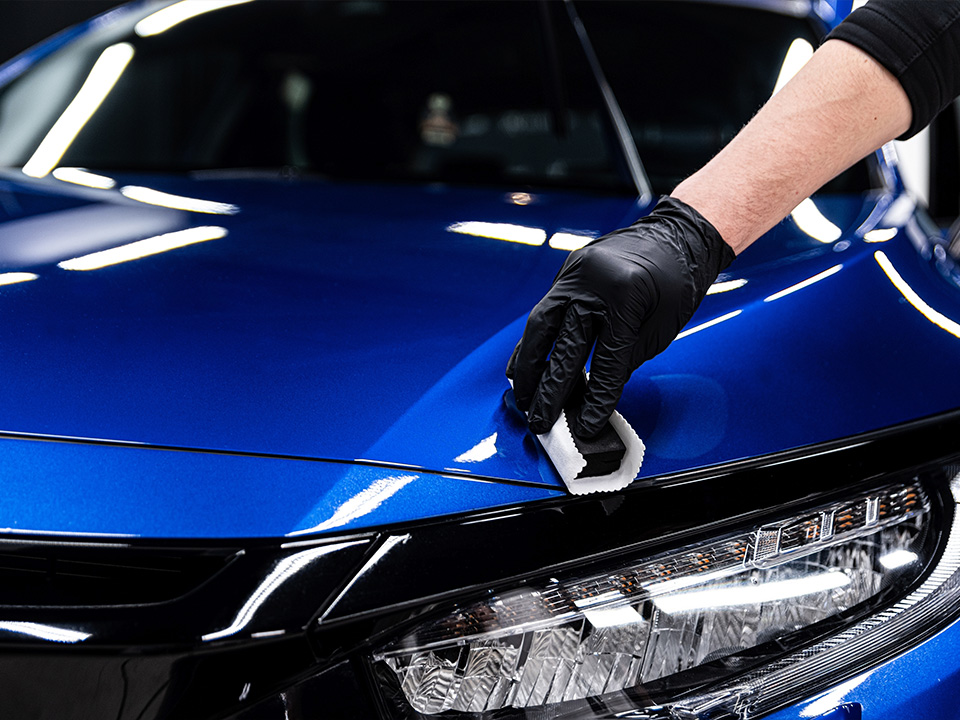
What you need here is a protective veil—a barrier that doesn’t vanish in a few hours, but can resist, adhere, and defend. Exactly like Polishing Protective Wax.
Its use is simple, even for less experienced hands.
After a careful wash—ideally in the shade and with a neutral shampoo like Shampoo Wax—the ideal option is the Polishing Protective Wax | Kit, applied with Hand Pad Polishing and refined with Microfibre Cloth gold.
And at that point something happens: the surface feels alive again. The color wakes up, as if it had recovered its identity. And above all, you feel the difference to the touch: smooth, slick, protected.
Polishing Protective Wax doesn’t just create a barrier against UV rays and saltiness—it also reduces dirt adhesion, so sand, dust, and insects have less “grip” on the surface.
That means future washes become more effective and less aggressive, because dirt slides away more easily.
But there’s another area of the car that deserves special attention in summer: the windows. Visibility depends on them.
Between sea spray, sudden rain, and blazing sunlight, it’s easy to end up with a windshield and rear window marked by streaks and micro-scratches.
Glass Cleaner can be used on external (and internal) glass by spraying the product directly onto a microfiber cloth and onto the glass surface you want to clean.
A few gentle circular movements are enough to leave the surface clean and dry. No extra drying is needed: the product evaporates quickly and leaves no streaks. Glass Cleaner is perfect for all windows, including side glass, windshield, mirrors, and panoramic roofs.
Cabin under the sun: summer seen from the inside
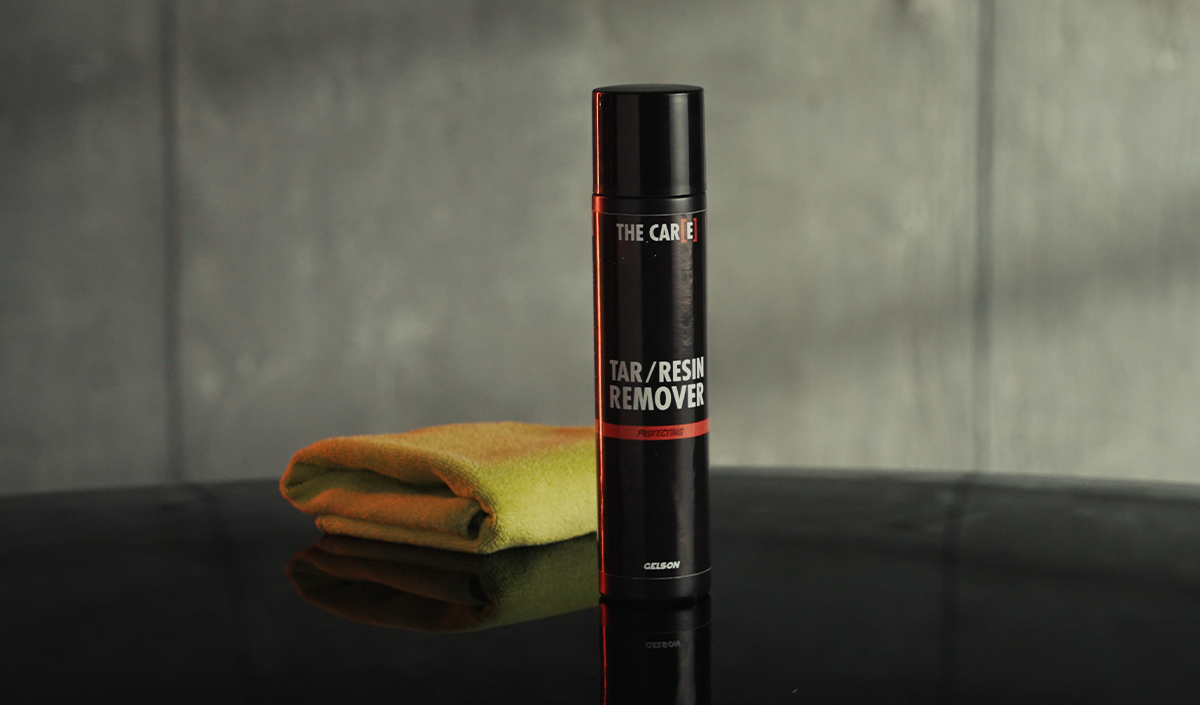
Have you ever opened your car after a long stop under the July sun? The air inside hits you like a giant hairdryer waiting for you. Seats burn, the steering wheel is scorching, and there’s that smell of “cooked plastic,” as if every surface had absorbed the sun and is now releasing it all at once.
But if you think about it, the most annoying feeling isn’t the heat. It’s that dull film on the dashboard. It’s the dust settling into every gap. And above all, it’s the doubt that tightens in your throat: day after day, your car’s interior is aging faster than you are.
Many focus on the paint, the exterior wash, the shine. But the truth is: the cabin also suffers in summer. UV rays filter through glass and strike the dashboard, vents, door panels, and plastics. Light fades, dulls, “cooks,” and cracks materials. You don’t notice immediately—until you do.
Prevention, here too, starts with simple steps. A damp cloth once in a while isn’t enough. You need a product designed to clean deeply and protect correctly.
Dashboard Polish revives interior plastics (dashboard, trims) in one pass. All you need is a dry microfiber cloth: the product doesn’t feel greasy, doesn’t leave sticky residue, and doesn’t alter the original color.
Most importantly, it creates an invisible filter against sun exposure, slowing down aging. Used regularly, it helps keep plastics nourished and elastic and repels dust thanks to its anti-static effect. This is not just aesthetics—it’s functional preservation.
Another overlooked area? Air vents and dashboard gaps.
They’re difficult to reach but essential: dust hides there, residue accumulates, and that “invisible gray” forms—the one that makes the car feel less clean and less healthy.
Use soft-bristle brushes to lift dirt, then wipe with a cloth lightly dampened with Dashboard Polish for a surprisingly crisp result.
And then there are door sills, storage areas, and seals. In summer these parts dry out and stiffen. Seals, in particular, benefit from Plastic Refresher, designed for exterior plastics and rubber seals. If left exposed to sun, they lose elasticity and start to crack. A light application revives them and builds a subtle barrier that isolates delicate parts from external aggression.
Don’t forget the steering wheel: it’s the most “touched” part of the car—and for that reason, the most exposed to wear. Sun hardens it, hands soil it, time consumes it.
For cleaning and caring for it—especially if it’s plastic or synthetic leather—you can use Plastic / Metal Refresher Kit with a dry microfiber cloth, leaving a natural, protective finish against solar stress.
For a deeper clean before applying any protectant, you can use a dedicated degreaser such as Degreaser.
One practical last tip: park in the shade whenever possible, but if it’s not, invest in a windshield sunshade. It seems like a minor gesture, but it blocks a huge portion of direct radiation—and in the long run, it truly helps preserve the cabin.
Tires and forgotten details
For some reason, we often neglect tires. We leave them there, dull, marked by time, as if they weren’t part of the aesthetic or functional equation. Yet they are the ones carrying everything—every day.
In summer, tires suffer more than ever. High temperatures dry the rubber, UV rays fade the surface, and sand acts like invisible sandpaper.
Look closely and you’ll notice how the deep black tone gives way to a tired gray—rough, almost dusty. And that’s not just visual: it’s a sign the rubber is dehydrating and losing elasticity, accelerating wear.
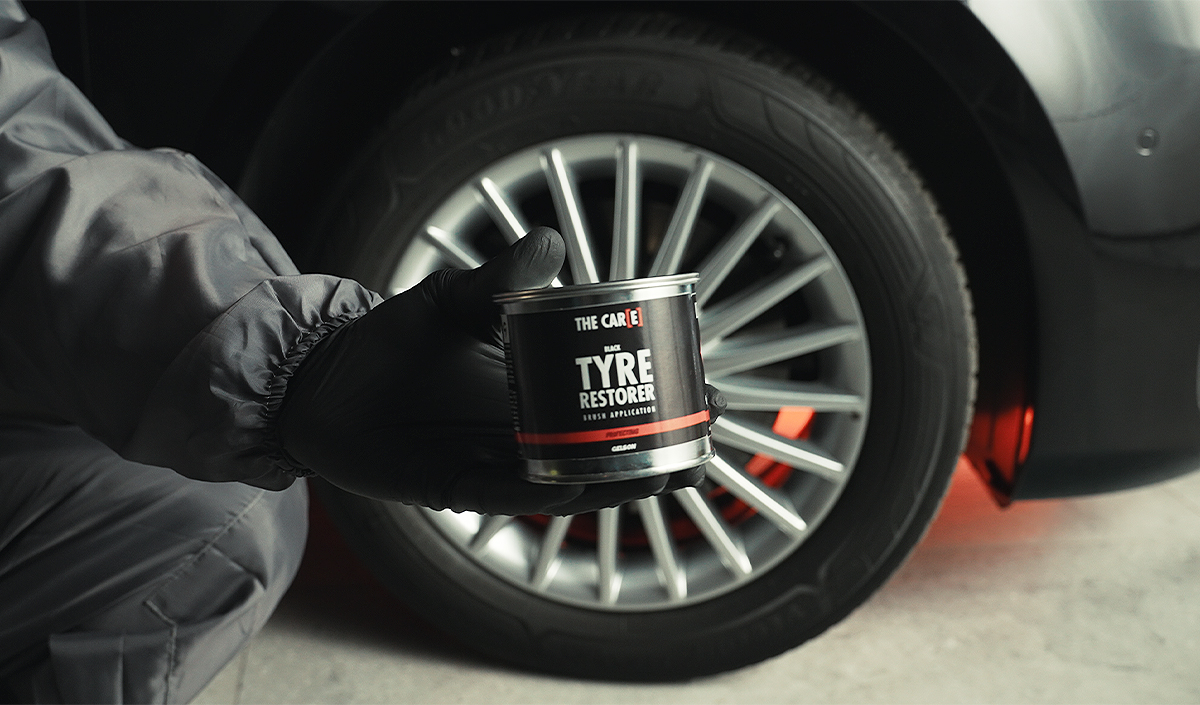
How do you prevent it? With simple, consistent steps. One of them is Tyre Restorer (a black solvent-based tire paint). It colors the tire and acts as a UV filter—it doesn’t “nourish” or restore damaged rubber, but it helps prevent further deterioration if applied in time.
After a summer wash, apply it with a foam pad (mask the rim with paper tape), let it dry, and go over it again for a uniform finish—no excess, no runs. The effect is discreet and clean, but above all protective: a barrier against sun, dust, and salt.
But tires aren’t the only ones suffering. Around them there’s a world of forgotten details: exterior plastics, unpainted bumpers, trim pieces, glossy inserts. Heat fades them, dries them, hardens them.
Here too, a dedicated product helps bring back a alive, even surface—closer to “new.”
Then there are those corners you don’t notice until they start degrading: door sills, rubber seals, window trims.
And don’t forget metal: badges, frames, chrome details—your car’s signature. One week of sun and salt can dull them. A product that works on plastics can be valuable here too: applied delicately, it creates a protective film that helps prevent oxidation and haze. All it takes is attention—and the willingness to care for something that takes you places every day.
Comfort to preserve—not sacrifice: seats under the sun
Among all the elements inside a car, seats are the ones that live longest in contact with us. They welcome, accompany, and endure. Yet when it comes to care—especially in summer—they’re often treated with rushed superficiality: a quick vacuum, a fast wipe with a damp cloth, and done.
Summer is the season that tests upholstery the most, especially fabric. Fibers easily absorb sweat, humidity, and salty traces, while high temperatures “set” dirt, making future cleaning harder.
The outcome? Dull stains, persistent halos, and a worn look that clashes with the rest of the cabin—even if everything else looks spotless.
Even leather—although more premium—is not immune. If neglected, it stiffens, starts cracking where friction is highest, and loses its natural softness. And every tiny flaw becomes more visible, as if summer light amplifies everything.
Here you need careful, regular attention—something that cleans and protects without harshness.

Start with a deep vacuum to remove sand and fine dust trapped in seams and folds. Then the ideal step is Interior Cleaner Kit, which combines detergent, a microfiber cloth, and disposable TNT wipes—designed to be effective and gentle on every material.
The kit’s detergent contains no aggressive solvents and can be sprayed onto the cloth or the surface, then worked in circular motions with light pressure. It lifts impurities without altering color or texture. Once removed, it leaves a clean, dry, neutral finish—no streaks, no residue—and a pleasant, non-invasive scent.
One last detail: rear seats. Often ignored (especially if you rarely have passengers), they still collect dust, suffer scuffs from luggage, marks from child seats, and heat exposure from objects left behind. Treat them with the same care as the driver’s seat—because every centimeter of the cabin speaks of your care. Or its absence.
Maintenance isn’t only about looks: a well-kept cabin improves your driving experience, feels fresher, and gives that sense of order that affects mood too. You can feel the difference between sitting on a clean, fresh seat and one that “transmits” heat, dirt, and fatigue.
A season to live, a car to protect
Summer is not just a period to get through: it’s a window of light, wind, and freedom that leaves its mark on everything—on memories, yes, but also on the surfaces of what follows you every day, like your car.
Protecting it is an act of responsibility. Every gesture of care reflects a different way of living summer. Every time you stop at a traffic light and the light grazes the paint, every time you open the door and breathe an air that feels clean, dry, ordered—you realize that even the simplest gesture made a difference.
And if you’re looking for a concrete starting point for your detailing routine, you can rely on The Care: products and accessories designed to make protection accessible, without complicating your life. Care, elegance, effectiveness—it’s not a way to show off. It’s a way to choose, every day, the best for what you love.