
An emotion that brings the eager wait to a close and contains a mix of excitement, anticipation, and the desire to preserve intact that sense of perfection that accompanies the first few miles.
The scent of freshly assembled interiors, bodywork free of imperfections, the dashboard neatly reflecting the light: every element helps define an ideal of beauty that time, inevitably, tends to wear away and transform.
And yet, it is precisely on that first day that the care begins—setting up a preventive maintenance routine which, if well calibrated, allows you to prolong that “showroom car” condition over time. This is not only an aesthetic matter, but an intelligent choice that directly affects the car’s resale value, the quality of the driving experience, and the comfort of the cabin.
In this guide we will explore, step by step:
- Paint protection. that first gesture that makes the difference
- Interior care between order and protection at every glance
- Finishes, visibility and attention to detail
Paint protection: that first gesture that makes the difference
The paintwork of a new car is, without a doubt, its most striking calling card: in the first days after registration, the bodywork appears at its highest level of form and expression—glossy, taut, free of imperfections, almost as if it were reflecting the image of a precious object, freshly shaped.
However, it is precisely in this initial phase, when the clear coat is still “young and fresh” and has not yet been attacked by the elements, that a targeted protective treatment becomes necessary.
And no—carefully washing the car is not enough! In this case, it becomes essential to act preventively, creating from the very beginning a barrier against the most common threats—smog, acid rain, fine dust, tree resins, and insects. All silent enemies of that initial shine that is so striking to the eye (and to the heart).
For this purpose, we recommend Polishing Protective Wax, a professional product designed to be applied even on new paintwork, without the risk of altering its original gloss. Its formula, free of abrasives, contains water-repellent polymers and sealing agents that not only enhance color depth, but create a protective microfilm capable of repelling water, mud, and dirt, significantly slowing down the build-up of impurities.
The immediate benefits?
Two above all. The first is being able to keep the bodywork cleaner for longer; the second is that subsequent washes will be simpler and less aggressive, thus reducing the risk of micro-scratches and dulling caused by rubbing. In fact, the product leaves neither streaks nor residue.
Applying the wax does not require professional equipment or detailer-level skills. It is enough to work in a shaded environment, with the bodywork dry and cool to the touch.
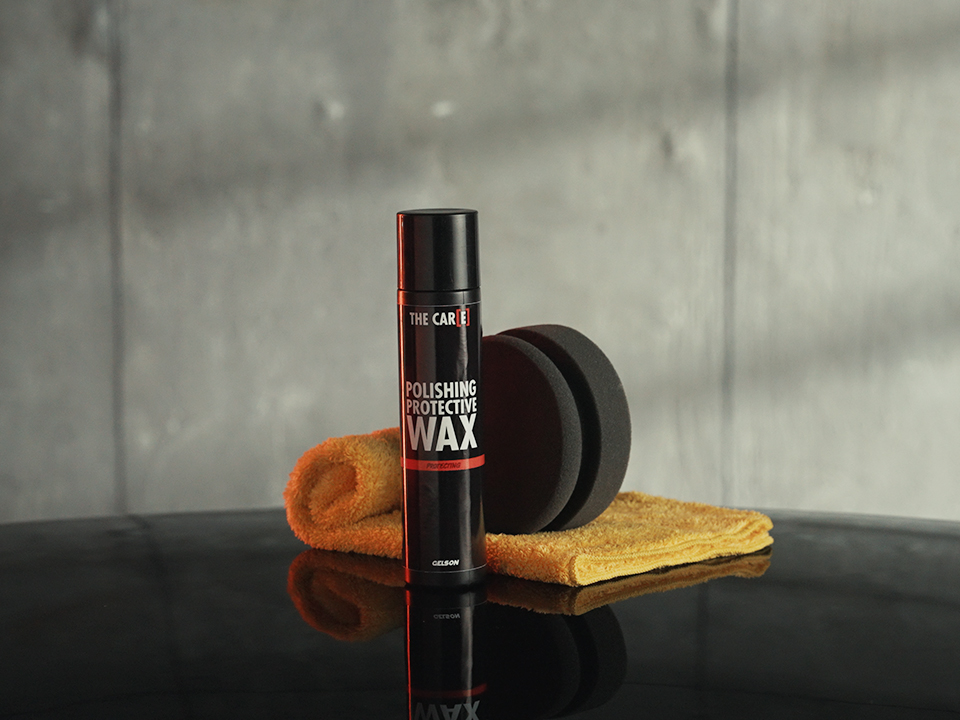
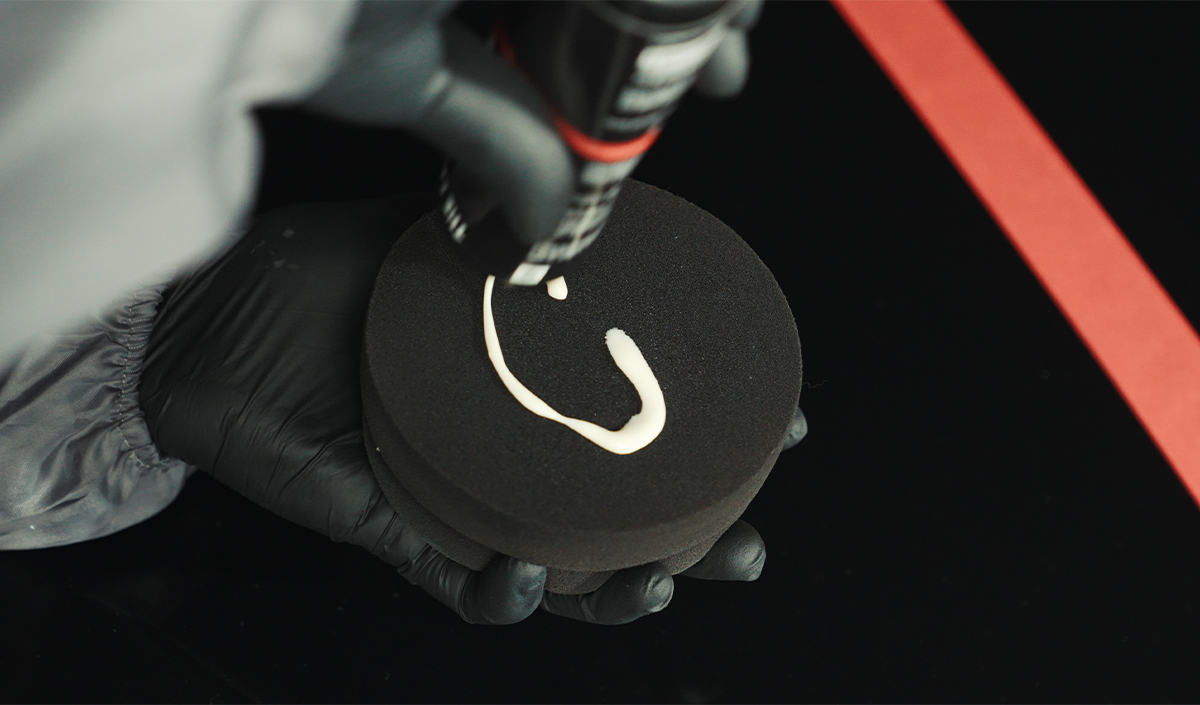
After shaking the bottle, apply a small amount of product to Hand Pad Polishing and work it onto the area to be treated with longitudinal movements, section by section until the entire surface has been treated. Once the wax is applied, with a microfiber cloth such as Microfibre Cloth gold, you can remove any excess product, polishing the freshly treated surface. This finishing process helps give your cars the ideal look, ensuring shine and protection over time.
We also recommend treating the entire bodywork, including bumpers, hood, pillars, mirrors, trim, and plastic or metal inserts: although they are not painted, they too benefit from the protective effect of the wax and will appear brighter, consistent with the overall look of the car.
The operation can be repeated every two or three months, depending on usage conditions and where the car is usually parked—think, for example, of those who live in coastal areas with salty air, or those who drive mainly in urban routes with greater exposure to acid rain and diesel residues.
That said, it’s not simply about using a product, but about following a care model that, from day one and for every centimeter of the car, encourages attention and allows the initial beauty to last over time.
Interior care: between order and protection at every glance
Who has never felt that intoxicating “new” smell when stepping into a freshly registered car? The scent of untouched plastics, the softness of the upholstery, the shine of interior surfaces still free of fingerprints, scratches, or dust. And yet, just a few weeks of use—just a few miles—are enough for that enchantment to fade.
The air conditioning carries fine dust that settles on the dashboard, UV rays filter through the windshield slowly altering the tone of plastics, while every gesture—even the most involuntary—contributes to the accumulation of micro-marks and dullness.
To preserve that original refinement of surfaces, an excellent product is Dashboard Polish, a specific treatment for interior plastics, door panels, and dashboards.
Its effect is twofold: on the one hand, it acts as an anti-static protectant, preventing dust from adhering and building up; on the other, it restores a satin finish—uniform, deep, and even—without the artificial, greasy shine of low-end silicone products.
The result? An elegant finish, consistent with the premium aesthetics of modern cars, that doesn’t reflect light excessively and leaves no oily residue to the touch.
Using Dashboard Polish is simple, but it requires attention and method. It is recommended to spray the product directly onto a fine-weave microfiber cloth such as Microfibre Cloth green, preferably dry and dedicated exclusively to the interior, then proceed section by section with slow, linear movements.
This gesture not only helps distribute the product evenly, but also allows you to visually “read” the surface, identifying any imperfections or build-up to remove.
Particular care should be given to areas most exposed to light, such as the upper part of the dashboard, and to zones subject to frequent contact: storage compartments, trim, side controls.
A significant advantage offered by Dashboard Polish is its ability to protect plastics over time from fading, cracking, and micro-fractures—phenomena as common as they are irreversible if not prevented in time. Its protective action also extends against UV rays, the primary cause of the cabin’s visual aging.
But there’s more: its anti-static effect not only prevents dust from settling, but also significantly reduces the frequency of cleaning interventions, optimizing time and resources in routine upkeep.
At the first application stage—ideally within the first two weeks after delivery—it is recommended to treat the entire cabin, including lower plastics, frames around the center tunnel, and side door bins. A single well-distributed pass will be enough to provide protection and chromatic uniformity, to then renew every two months or as needed. A small daily habit—such as wiping with Microfibre Cloth red, soft and dry, once a week—will help keep the treatment active longer, slowing down the accumulation of impurities.
The beauty of the cabin isn’t only in ergonomics or technology, but in its ability to remain unchanged over time—like the day you turned the key in the ignition for the first time.
Finishes, visibility, and attention to details
When sunlight starts to sculpt the edges of trim, when rain leaves small limescale traces on profiles and seals, or when your gaze falls on the edge of a chrome detail that has lost its shine, you realize how it is precisely the details that betray the passing of time.
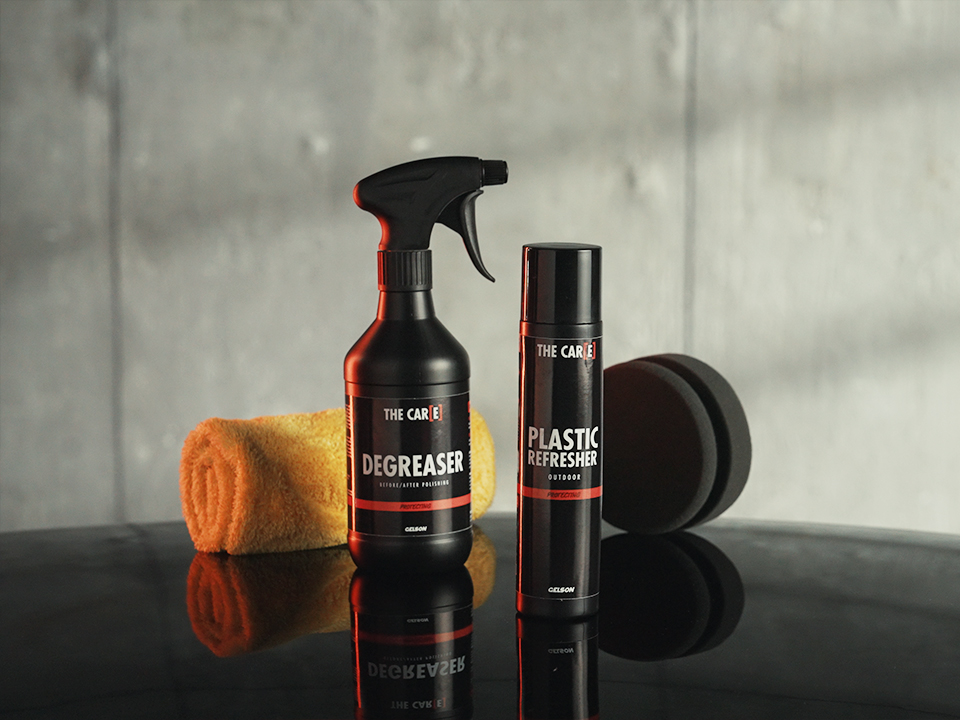
In this perspective comes the use of Plastic Refresher, an advanced treatment designed to revive and protect exterior plastic or metal surfaces.
It is a complete kit capable of acting like a balm for these surfaces, penetrating the material and restoring tone, color, and visual solidity.
It is applied with Hand Pad Polishing and Microfibre Cloth orange (long-pile side) or Microfibre Cloth gold. But if the exterior speaks to the world, the interior speaks to the driver. And nothing affects the perceived quality of time behind the wheel more than visibility. A hazy interior windshield, morning condensation streaks, unexpected reflections under oncoming headlights: these are all small annoyances that, over time, become disturbances and even risks. Our recommendation is to use Antifog Kit.
The anti-fog treatment is easy to apply: after perfectly cleaning the inner glass surface—preferably with Glass Cleaner and a fine-weave cloth such as Microfibre Cloth red—you then apply the anti-fog product with a dedicated cloth and let it dry for a few minutes. The effect is immediate: an invisible film that reduces the surface tension of moisture, preventing it from condensing into visible droplets. The windshield will remain clear, even in rain, temperature swings, or cold mornings.
From day one, we at The Care guide you in building a routine made of simple but mindful gestures, offering professional formulations—gentle yet effective—designed for those who demand the best without compromise.
Protect your car as it deserves, with precision and attention to detail. So that every mile tells the same emotion as the first.